iRobot Launches Five New Roomba Models and Disinfecting Floor Cleaner
After filing for bankruptcy last December, a lot of us quietly wrote off Roomba — the name that practically invented the robot vacuum category was suddenly yesterday's news. But iRobot's new parent company, Picea, clearly had other plans.
The Cordless Cleaner That Steals the Show
The most intriguing product isn't even a robot. The Roomba Electro Plus is a cordless upright wet-dry vacuum priced at $399.99, available right now. What makes it stand out — at least on paper — is that it electrolyzes plain tap water to disinfect floors, claiming to kill 99.99% of surface germs and bacteria without a single cleaning chemical. The roller mop handles both wet and dry messes in one pass, then parks itself on a ThermaClean Dock that washes the roller while it charges. If you've ever stood at the sink rinsing a mop head after cleaning up a spilled dinner, you already know why that self-cleaning dock matters on a Tuesday evening.
At that price, iRobot is undercutting comparable wet-dry vacuums from Roborock, Dreame, Tineco, and Mova — which is a refreshing change of pace from the old pricing playbook.
More Roombas, More Sensible Pricing
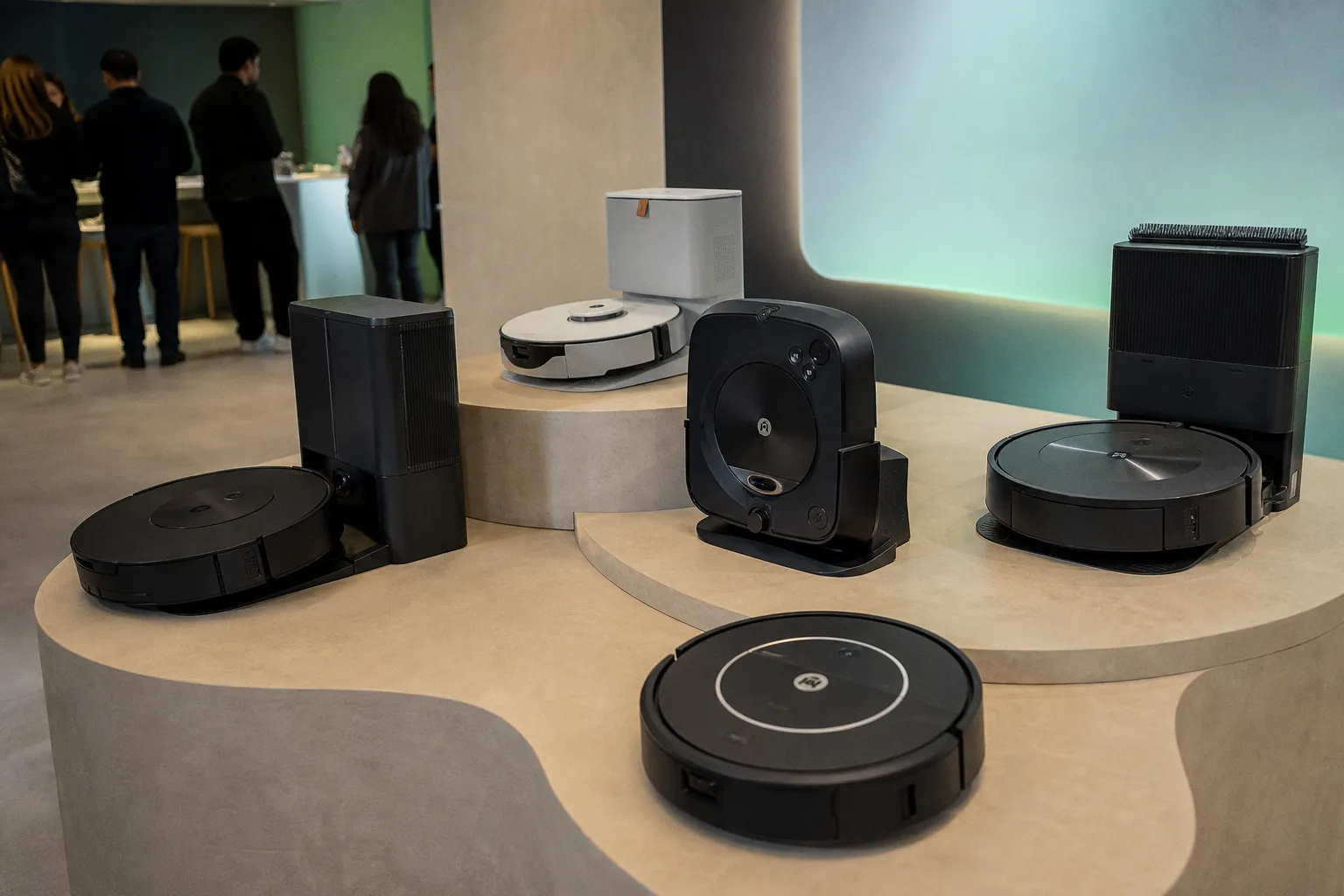
The robot vacuum lineup covers a wide range. You've got the Roomba Plus 415 at $599.99 for basics, stepping up through the 515 and 575 with AutoWash Docks, all the way to the Roomba Max 775 at $999.99. The Max 775 caught my eye in particular: it's described as using heated spot mopping with hot water while actively scrubbing, which was a feature I loved in the Narwal 2 Flow — a $1,499.99 machine. If iRobot delivers on that promise at nearly $500 less, it's a genuinely competitive move.
Suction numbers are stronger across the board too. iRobot confirmed via email that the top-tier Max 775 and Max 715 hit 30,000 Pa, which puts them within striking distance of the most powerful robot vacuums on the market right now (those sit around 35,000–36,000 Pa). The more affordable models start at 20,000 Pa. For context, the pre-bankruptcy Roombas that felt underpowered compared to similarly priced competitors have been replaced with specs that actually justify the price tags — or at least come a lot closer.
Most units are available now, with the Plus 575 and Max 715 currently on preorder.
Who Should Actually Care
Here's the honest read. If your current Roomba is still doing the job — quietly running under the couch, picking up crumbs after dinner — there's no emergency to upgrade. But if you've been frustrated by weak suction, a mop that smears more than it cleans, or maintenance that feels like a second chore, these new models address those friction points directly. The Electro Plus in particular fills a gap that a robot vacuum alone can't: quick, chemical-free disinfecting of hard floors when you need it now, not on a scheduled cycle.
What I'd hold off on is preordering the models that aren't shipping yet. The specs sound promising, but real-world performance under your specific roof layout, pet hair situation, and flooring type is what determines whether a Roomba earns its counter space. Wait for the first wave of independent reviews, especially for the Max 775's hot-water mopping — that's the feature that could either be a genuine upgrade or just clever marketing.
For anyone who assumed iRobot was done, this lineup says otherwise. Whether it's enough to reclaim the top spot from brands that spent the last two years innovating unopposed is another question entirely — but at least the conversation is interesting again.