Samsung's AI Washer Dryer Cuts Energy 35% in Smart Home Push
The failure mode for smart laundry has always been obvious: you buy a connected machine, then still end up babysitting cycles like it’s a beige box from 2009.
The useful bit is energy logic, not “AI” branding
Samsung says the Bespoke AI Washer Dryer reaches top-tier energy-efficiency ratings in applicable markets, with some European models beating the Class A minimum by up to 35 percent. That matters because laundry is one of the few smart-home categories where automation can touch a real recurring cost instead of merely moving buttons from a panel to an app.
The more aggressive control path runs through AI Energy Mode inside SmartThings Energy. When compatible cycles are selected, Samsung says the feature can cut energy use by up to 70 percent by washing at lower temperatures and adjusting cycle time as needed. That phrasing is doing work: “compatible cycles” means this is not a universal override switch. If you’re mapping your home energy routines around it, treat it like a conditional trigger, not a global rule.
AI Ecobubble is the mechanism Samsung is using to justify lower-temperature cleaning. The system turns detergent into bubbles that penetrate fabrics more quickly, and Samsung says it improves soil removal by up to 20 percent while enabling effective washing at lower temperatures. Add the circulation pump and optimized algorithms, and the pitch becomes clear: shift the cleaning payload from heat to chemistry, timing, and sensing.
SmartThings gets the workflow — and the lock-in risk
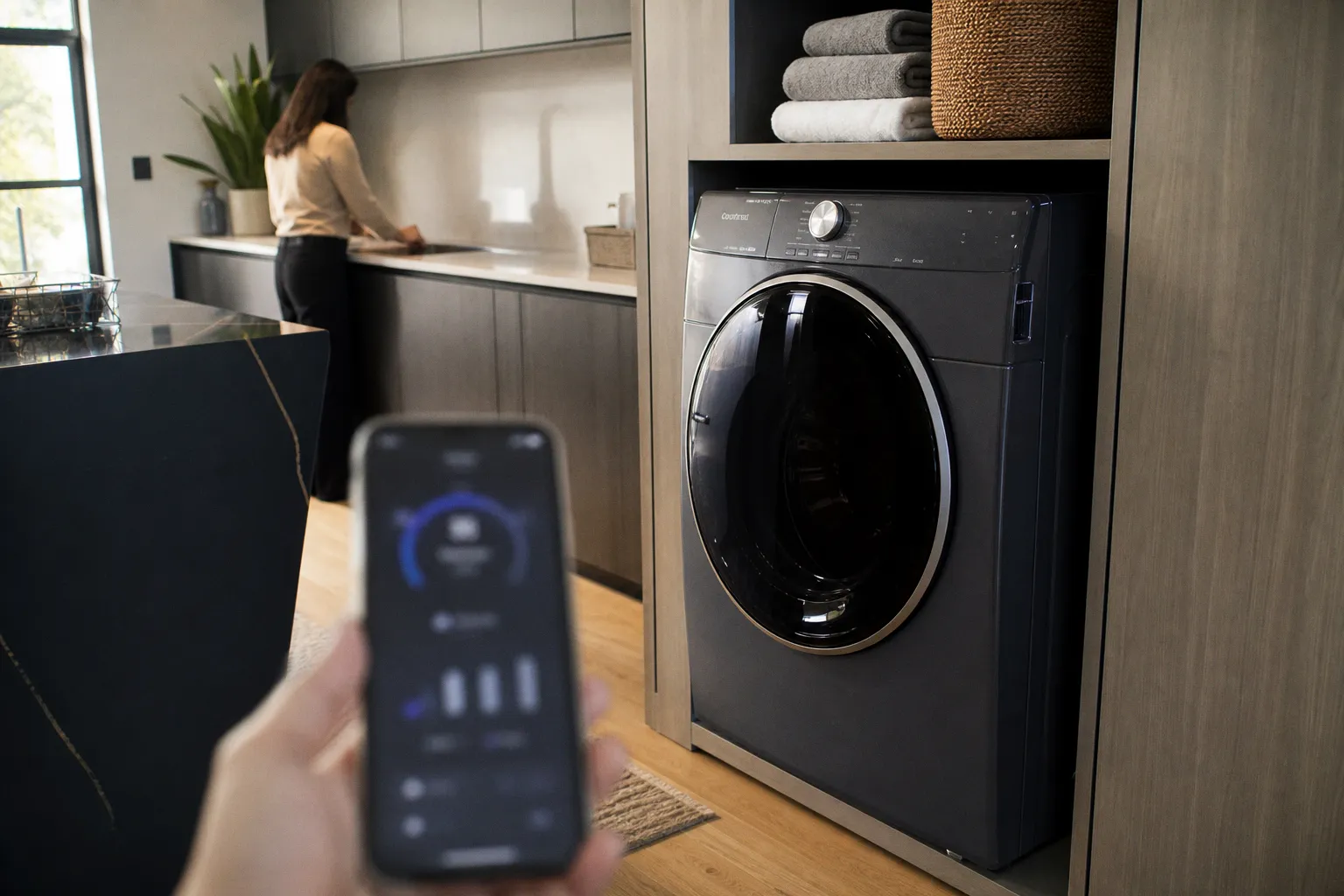
The appliance is not just a washer-dryer with a chip bolted on. Samsung is routing the experience through SmartThings: energy monitoring, estimated electricity costs, cycle recommendations, laundry planning, and troubleshooting support all live there. Quick Remote is also supported on compatible Galaxy smartphones, which gives Samsung a neat proximity-control hook without forcing users to dig through the full app.
That is convenient if your home already runs on Samsung gear. It is also the part I’d inspect before buying. SmartThings has been criticized elsewhere in the Samsung ecosystem conversation — SamMobile’s recent line was that Samsung has neglected SmartThings for too long and that it needs a complete makeover. That doesn’t invalidate the washer-dryer, but it does frame the practical question: is the automation layer durable enough to trust with daily chores?
AI Control, available on select models, learns frequently used cycles and settings, then suggests cycles based on machine learning as well as periodic, weather, and seasonal needs. Good automation should remove taps, not create a new dashboard dependency. If Samsung’s recommendations are transparent and easy to override, that’s useful. If they’re buried behind opaque nudges, it’s another walled garden wearing a laundry label.
The same scrutiny applies across connected systems, whether it’s appliance telemetry or market infrastructure like Nasdaq’s expanded market data distribution through Pyth Network: the payload is only as useful as the rails carrying it.
What to check before treating this as an upgrade
The strongest part of Samsung’s announcement is the combination of sensing and dispensing. AI Wash detects load weight, fabric softness, and soil level, then adjusts water, detergent, soak, rinse, and spin timing. The Flex Auto Dispense System handles detergent and softener dosing. That is exactly where laundry automation should live: measurement first, action second, fewer human guesses in the loop.
Air Wash is the other practical feature. It refreshes garments and bedding without water or detergent by blowing super-hot air onto the laundry. For items that don’t need a full wash cycle, that could reduce unnecessary wash loads and help preserve fabrics over time, based on Samsung’s description.
But don’t buy the headline alone. Check whether the model sold in your market is one of the versions tied to the strongest efficiency claims. Confirm which cycles support AI Energy Mode. Verify whether the SmartThings features you care about work with your phone, especially Quick Remote on compatible Galaxy devices. And if you’re building actual home automation around this machine, look for the boring details: stable app controls, clear energy reporting, and cycle states that behave predictably.
Samsung’s bet is sensible: stop selling “smart” as spectacle and start using it as a logic gate for energy, detergent, and time. The washer-dryer sounds less like a gimmick when the automation has a measurable job. Now the execution burden shifts to SmartThings — because a clever appliance chained to a flaky control plane is still just bad software with a spin cycle.