Smart Kitchen Appliances Market AI-Powered Connected Cooking
The smart-kitchen pitch has hit its favorite trigger again: “AI-powered connected cooking.” openPR is framing the smart kitchen appliance market around that exact idea, while separate coverage points…
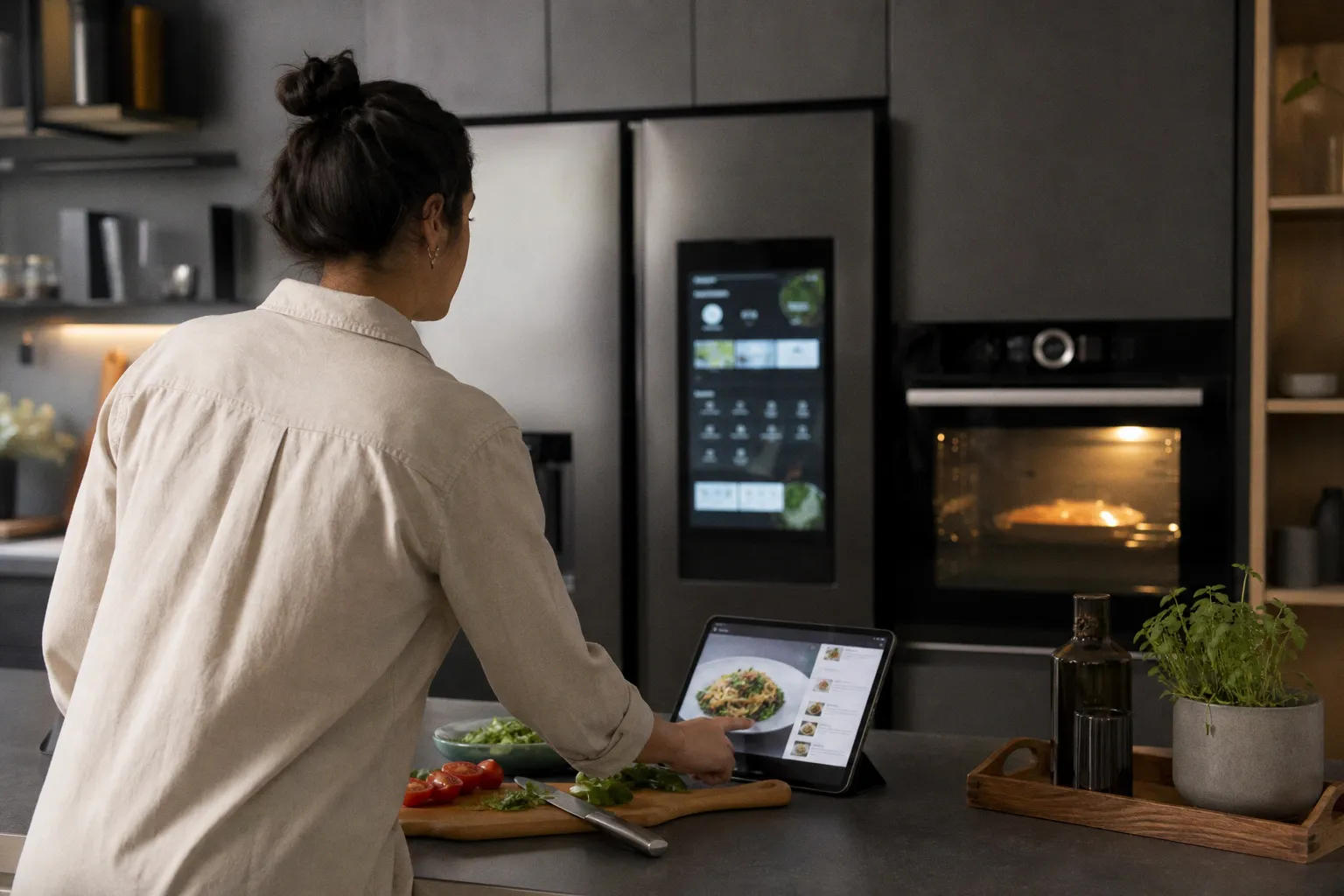
The smart-kitchen pitch has hit its favorite trigger again: “AI-powered connected cooking.” openPR is framing the smart kitchen appliance market around that exact idea, while separate coverage points to Midea pushing harder into app-controlled, networked appliances and Mexico Business News highlighting time and convenience as appliance-market drivers. Strip away the glossy payload and the signal is simple: the kitchen is becoming another automation surface — but not every “smart” oven, rice cooker, or dishwasher deserves a place in your home stack.
The appliance is no longer the endpoint
Midea’s current positioning is a useful read on where the category is going. The company already sells across the appliance map — air conditioners, refrigerators, washing machines, dishwashers, microwave ovens, rice cookers, electric kettles, vacuum cleaners, and more — and, according to ad-hoc-news.de, smart-home functionality is becoming central to its product roadmap.
That means more models controlled through smartphone apps, voice assistants, or integrated home systems. The promised flows are familiar: monitor energy use, schedule operations, and tune comfort or convenience from a screen instead of walking to the machine like some tragic pre-webhook peasant.
For kitchen gear, that turns the appliance from a dumb endpoint into a node. A dishwasher can be scheduled. A rice cooker can sit behind a routine. A kettle can join a morning sequence. Useful, yes — if the integration is clean. Infuriating, if the device only speaks to its own app and treats the rest of your home like an unauthorized packet.
“AI cooking” needs a real automation contract
The phrase “AI-powered connected cooking” is doing a lot of work in the market headline. Based on the available source material, there are no confirmed technical details here about specific models, algorithms, standards, or launch plans. So the right posture is not hype; it’s inspection.
If a smart kitchen appliance claims intelligence, ask what it exposes. Can it be scheduled outside the vendor app? Does it work with voice assistants or broader home systems, as newer Midea models are described as doing? Can you see energy use in a useful way, or is it just a decorative chart locked behind an account? Does the device support practical state changes — start, stop, preheat, notify, delay — or only send you marketing-grade alerts?
This is where the category often breaks. The hardware may be solid, the motor efficient, the thermal control competent — and then the software arrives with a login wall, fragile cloud dependency, and no sane automation hooks. A kitchen routine should behave like a logic gate, not a brand loyalty exam.
Convenience is the market hook; interoperability is the buyer filter
Mexico Business News is pointing at time and convenience as appliance-market drivers, and that lines up with the broader connected-kitchen story. People do not buy a networked dishwasher because they want another app icon. They buy it because a delayed cycle, a remote check, or a routine that avoids peak chaos in the home has actual value.
Midea’s wider strategy also matters here. The company has been expanding internationally, selling through distributors, retail chains, and e-commerce platforms, while investing in manufacturing automation and supply-chain optimization, according to the same report. It competes across mass-market appliances and HVAC, with smart-home capability increasingly part of the portfolio. That suggests connected features are not a boutique add-on anymore; they are moving into mainstream appliance catalogs.
The smart move for buyers is to treat “AI kitchen” as the start of the spec sheet, not the conclusion. Check whether the appliance integrates with the systems you already use. Check whether app control, voice control, and home-system integration are actually supported for the model in your region. Check whether energy monitoring and scheduling are first-class functions, not buried in a flaky cloud panel.
The advanced config is boring but decisive: buy the appliance for its core job first, then its automation surface. If the cooking is good and the controls expose clean triggers, it earns its network port. If the “AI” cannot escape its own app, leave it in the walled garden and keep your kitchen flow deterministic.