TP-Link Tapo C425 Kit: Can Solar Integration Truly End Battery Maintenance?
According to Forbes, TP-Link’s new Tapo C425 Kit pairs a wire-free security camera with a high-efficiency solar panel and promises continuous operation without manual battery recharging.
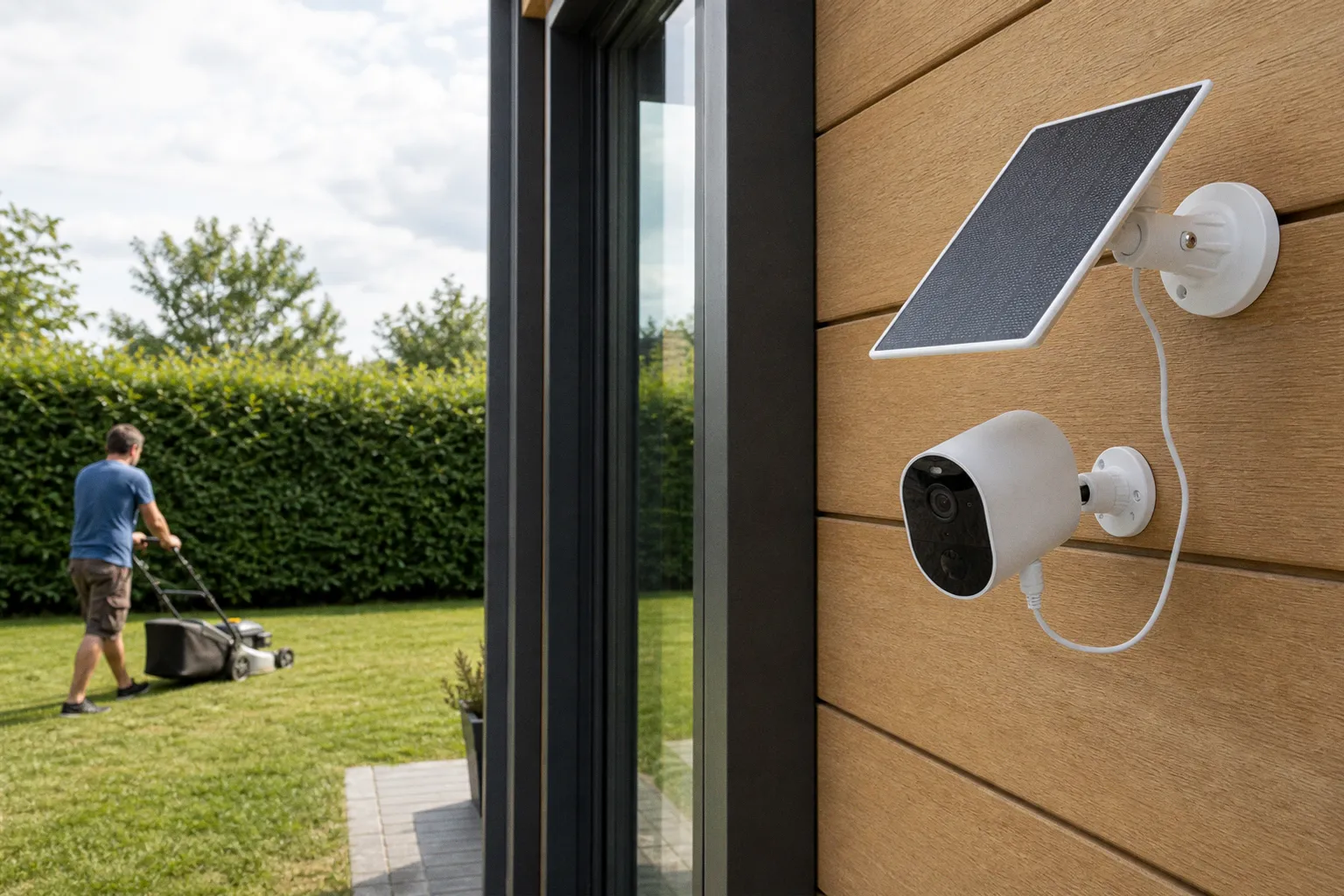
That is the entire value proposition in one line: remove the battery-maintenance interval from an outdoor camera deployment. For a smart-home security system, the missing details matter more than the solar-panel label.
The battery bottleneck is the product
A wire-free camera is normally constrained by stored energy. Recording frequency, live-view sessions, wireless traffic, and local conditions all compete for that reserve. TP-Link’s kit is positioned as an answer to the least technical but most persistent failure mode in this category: a camera that is installed correctly, then left inactive because its battery was not recharged.
The reported configuration combines the camera and panel as a kit rather than treating solar power as an aftermarket accessory. That makes the panel part of the surveillance path, not a cosmetic add-on. Continuous operation is the stated target.
But “continuous” is a manufacturer promise, not a tested operating result. The available report does not specify panel output, battery capacity, camera resolution, recording mode, Wi‑Fi behavior, storage path, or the environmental conditions behind the claim. None of those gaps can be filled with assumptions.
Solar does not remove the installation variable
The panel changes the maintenance model. It does not eliminate the need for a viable mounting location.
A camera can have an unobstructed view of an entry point while its paired panel has limited exposure. Conversely, a well-positioned panel can force the camera into a poor surveillance angle. The useful installation question is therefore not whether the kit is solar-powered; it is whether both components can be placed where they can perform their separate jobs.
Buyers should also separate power continuity from network continuity. Solar integration addresses the reported need for manual battery charging. It says nothing, in the supplied information, about video throughput, connection stability, notification delivery, or retained footage when wireless conditions deteriorate. A powered camera without a reliable path for video remains only partially operational.
That distinction is increasingly relevant across the category. Digital Trends reports that Arlo’s Pro 6 Spotlight Camera uses the 6GHz band via Wi‑Fi 6E to reduce video latency and improve battery efficiency in homes with heavy wireless congestion. TP-Link’s reported announcement makes no comparable networking claim. The C425 Kit should not be evaluated as though it does.
A practical security upgrade, pending the specifications
There is a clear division emerging in home monitoring hardware. Aqara’s FP3 presence sensor, as reported by The Verge, uses mmWave to locate up to five people in a room and includes fall detection without cameras. Its premise is sensing without video. The Tapo C425 Kit is built around keeping a video camera powered with less intervention.
Those are different deployments and different privacy boundaries. The Tapo kit may reduce a maintenance burden for exterior monitoring. It does not, based on the information available, establish an advantage in detection accuracy, video transmission, on-device processing, storage, or account security.
Verdict: wait. The solar panel is a relevant hardware addition for sites where battery recharging is the limiting factor. Purchase decisions should be deferred until TP-Link provides the operating specifications behind its continuous-operation claim.