Beyond Humanoids: Why Autonomous Mowers Are the Real Smart Home Frontier
Smart home humanoid robots get all the headlines—and the 19.8% growth projection.
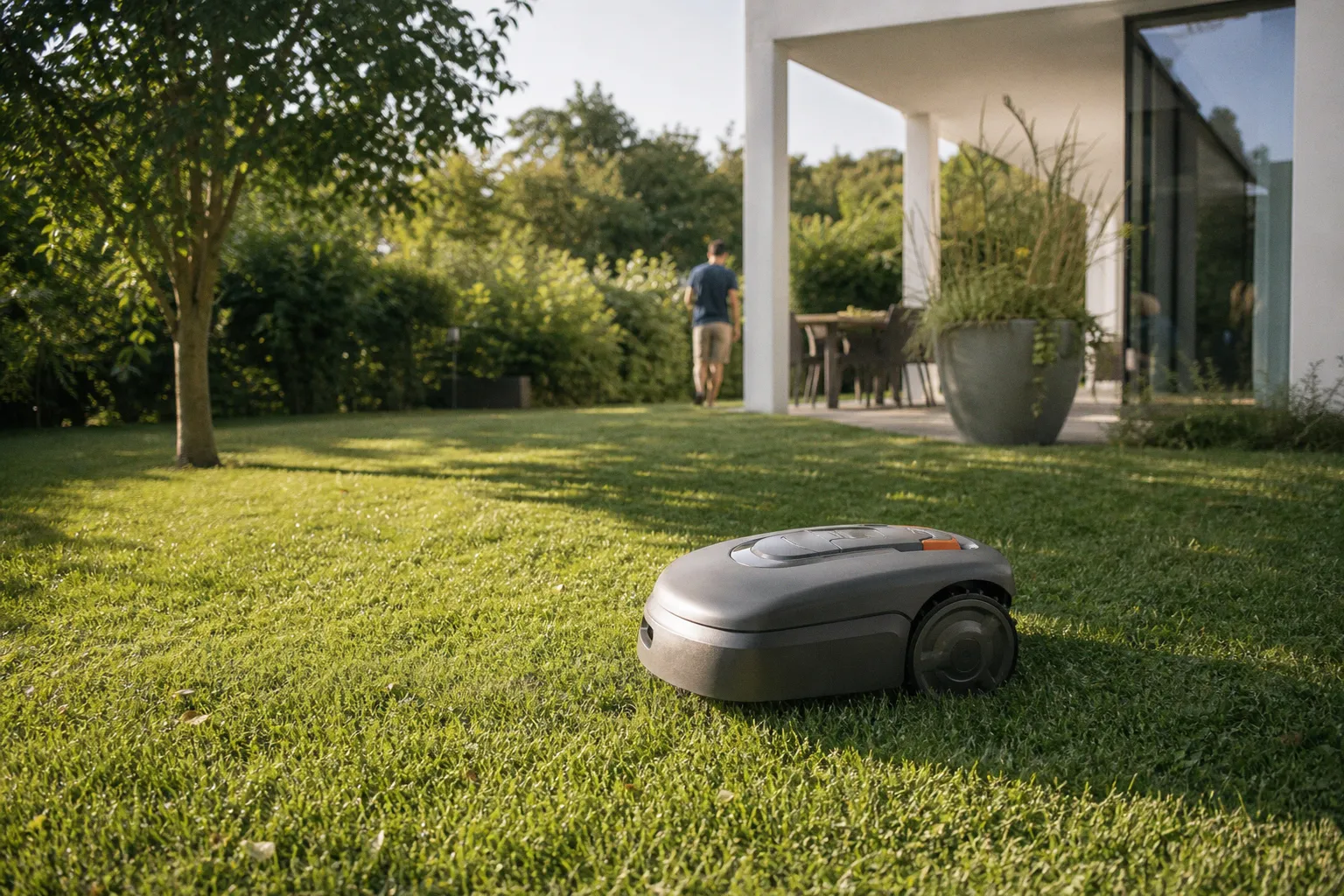
But if you’re actually wiring up a house to think for itself, the real automation frontier is elsewhere: in autonomous machines that handle the dumb, repetitive chores we still do manually. The gap between a humanoid demo and a lawn that maintains itself while you’re at work is where the practical tinkerer lives.
The Mower as a Trojan Horse for Outdoor Autonomy
Forget the sci-fi butler. The robotic lawn mower has quietly become the most mature piece of autonomous outdoor hardware. The tech stack is no longer about random bumping. Modern units deploy virtual boundaries via on-property antennas or app-based mapping, ditching the fragile perimeter wires that were a configuration nightmare. As detailed in one recent analysis, platforms are now leveraging all-wheel drive (AWD) combined with LiDAR, NRTK, and vision navigation to handle slopes and complex yard layouts. This isn’t just convenience—it’s a logic gate for healthier turf. Frequent, automated mowing encourages deeper root growth and natural fertilization through fine clippings, a closed-loop system that manual schedules rarely achieve. The automation payload here is clear: offload a chore and optimize an outcome.
The Current Price-Performance Gateway
Integration isn’t cheap, but the cost logic is shifting. Entry points for capable robotic mowers now hover around $669 for models like Segway’s Navimow i-series, with deals pushing that lower. The full spectrum runs from $700 to $5,000-plus. Put that against the alternatives: a gas-powered ride-on mower itself can cost $1,500 to $4,000, before fuel and maintenance. The automation premium is narrowing, and when you factor in the hours reclaimed, the ROI calculation changes. The trigger for adoption is less about raw cost and more about the value of your time—and your tolerance for manual, repetitive lawn management.
Advanced Config: Watching the Ecosystem Triggers
The real signal isn’t the humanoid growth stat—it’s the proliferation of specialized automata. The market is segmenting into purpose-built bots for outdoor care and, separately, for emotional companionship. For the protocol-minded, this means the smart home hub of tomorrow isn’t about centralizing control over a single humanoid bot; it’s about orchestrating a fleet of discrete, task-optimized agents. The webhook to watch is interoperability. Can your mower’s schedule integrate with your irrigation system’s moisture sensors? Can a robot pet’s presence trigger your home’s security mode? The future is a symphony of triggered automations, not a single walled-garden performer. The blueprint is already taking shape in your yard.