Why ADT’s Blu Security System Struggles to Compete with Modern DIY Alternatives
According to CNET’s review, ADT’s new Blu DIY security system is being held back by the control plane rather than its hardware: the app was described as buggy, camera setup as difficult, and Matter support is absent.
That is a critical failure mode for a security kit. A sensor network is only as dependable as the path between device enrollment, alert delivery, and daily control.
The hardware is not the bottleneck
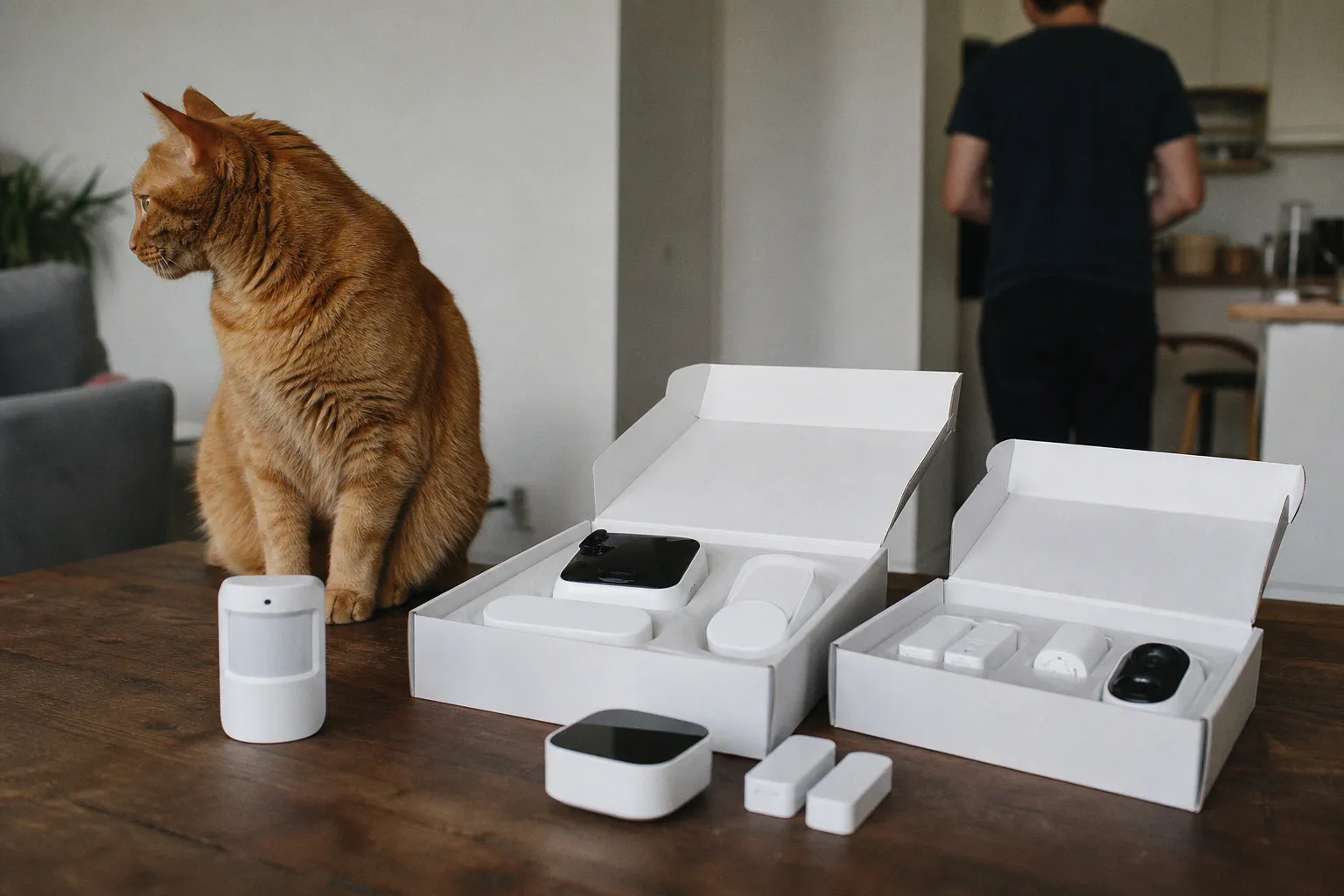
CNET tested the Blu Starter Kit alongside the Outdoor Camera and Video Doorbell. The reviewed kit included a hub, three door/window sensors, a motion sensor, a 2K doorbell, and a 2K outdoor camera.
The physical layer appears adequate. The hub combines a touchpad for arm/disarm codes with a siren, while the cameras use rechargeable designs, 2K video, two-way audio, person and package detection, and a 180-degree field of view. Basic sensor alerts and app history were reported as accurate and quick once the devices were operating.
But a competent sensor stack does not compensate for failed onboarding. CNET reported that the ADT app did not offer an option to set up the video doorbell during testing. Login problems and error messages were also encountered. For a DIY system, this is not a minor software defect. Setup is the commissioning process; if the app cannot reliably expose a camera to the account, coverage remains theoretical.
Matter is the missing integration layer
Blu requires ADT’s own hub for its additional devices. It cannot use an existing Matter hub such as a HomePod or Echo Show as an alternative, according to the review.
That restriction matters more than a specification-sheet omission. Matter support can reduce dependence on a single vendor’s app and hub architecture. Without it, Blu becomes a closed deployment tied to ADT’s software path—and that is the same layer CNET found unreliable.
The system does offer cellular backup through an additional subscription, and the hub includes buttons for contacting emergency services. Those capabilities may be relevant in a monitored-home configuration. They do not resolve the baseline issue: device setup and everyday management still run through the ADT app.
Do not buy the hardware ahead of the software
ADT Blu arrives in a market where DIY security buyers can compare low-cost cameras, sensors, and broader smart-home compatibility. Tom’s Guide, for example, recently highlighted Arlo’s Essential Pan Tilt Indoor Camera 2K for affordable wide indoor coverage and 2K clarity. The comparison is not that every camera needs the same feature set. It is that Blu’s package must justify its closed ecosystem with dependable operation.
Before committing, verify that every planned camera can be added in the current app, confirm how alerts and account access behave in practice, and decide whether a non-Matter hub is acceptable for the rest of the home.
Verdict: skip for now. Blu’s hardware may be serviceable, but the reported app failures and lack of Matter support leave too much of the security chain dependent on an unreliable control layer.