LNDU HK01W Smart Lock Brings Apple Home Key to the Budget Market
The lock has been reported by 9to5Mac as carrying a BHMA Grade 3 residential security rating — the lowest tier in the Builders Hardware Manufacturers Association's classification system.
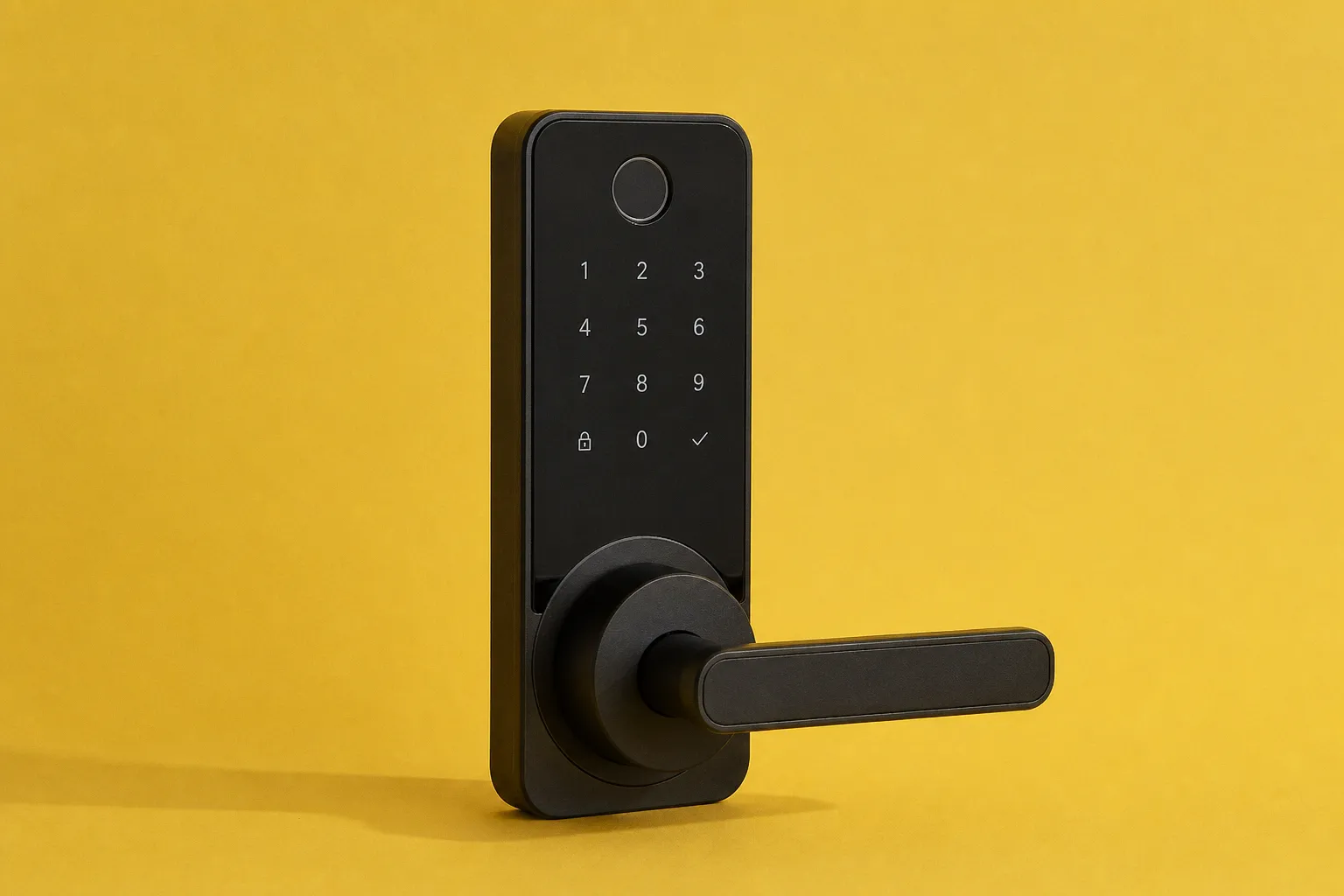
Apple Home Key support has been gated behind a $200-plus price floor for most of the lock market's history. LNDU is attempting to break that barrier with the HK01W, a Wi-Fi-based deadbolt launching at roughly $100 with native Home Key integration. The lock has been reported by 9to5Mac as carrying a BHMA Grade 3 residential security rating — the lowest tier in the Builders Hardware Manufacturers Association's classification system. For any reader weighing a budget entry point into Apple's tap-to-unlock ecosystem, the specs demand a closer look before purchase.
Wi-Fi Radio, Battery Trade-offs
The HK01W runs on a Wi-Fi radio for cloud and local network communication. In the smart-lock space, Wi-Fi remains the most power-hungry protocol option compared to Thread and Bluetooth Low Energy. LNDU mitigates this with an eight-AA-battery sled, estimating eight months of runtime under daily-unlock conditions. No independent battery-drain benchmarks have surfaced yet, so that figure should be treated as manufacturer-stated until validated.
A USB-C emergency power port is mounted on the bottom of the housing. If the battery pack is depleted, a portable charger can provide enough power to actuate the bolt — a practical failsafe that eliminates the dead-battery lockout scenario. A traditional keyway is also retained for physical-key access.
Installation is described as a standard US deadbolt retrofit requiring no additional drilling. A screwdriver is listed as the only tool needed.
BHMA Grade 3: What the Rating Actually Means
The BHMA grading scale runs from Grade 1 (commercial/heavy-duty) down to Grade 3 (residential, light-duty). Grade 3 certification indicates the lock passed minimum cycle, strength, and security tests for residential use but is not engineered for high-traffic or forced-entry resistance scenarios. For a primary entrance on a single-family home in a higher-risk area, Grade 3 may be a limiting factor. For interior garage doors, secondary entrances, or rental properties, the trade-off between cost and physical resilience becomes more defensible.
Apple Home Key itself operates over NFC, meaning the tap-to-unlock path is independent of the Wi-Fi radio. Authentication is handled locally between the device's Secure Element and the lock's NFC reader, which reduces attack surface compared to cloud-dependent unlock flows.
Market Context and What to Watch
The sub-$100 Home Key segment has been essentially vacant. Competing locks from Schlage, Yale, and others with verified Home Key support have anchored well above the $200 mark. LNDU's pricing strategy positions the HK01W as an on-ramp rather than a premium replacement, which aligns with secondary-entry or multi-door deployment use cases.
Worth noting: TP-Link's Tapo brand recently certified three 4K cameras under Matter 1.5.1, and Kincmo released no-drill smart blinds running Matter over Thread. The broader ecosystem is moving toward standardized protocols, but LNDU has chosen Wi-Fi over Thread for this model. That decision simplifies setup at the cost of power efficiency and mesh-network resilience — a trade-off that matters more in homes running Thread-based accessories.
No pricing volatility has been observed in the consumer lock segment that would track with institutional capital reallocation elsewhere; Goldman Sachs recently secured $70 billion in asset management mandates, a reminder that capital flows and consumer hardware innovation operate on entirely different timelines.
Verdict
Buy — if the target is a secondary entrance, interior garage door, or rental property where Apple Home Key convenience matters more than Grade 1/2 physical resilience, and where Wi-Fi infrastructure is already in place.
Skip — if this is a primary entrance lock for a security-sensitive property, or if the household has already committed to Thread and wants protocol uniformity across the mesh network. Wait for independent battery-life and NFC-reliability benchmarks before deploying at scale.