Philips offers free replacements after update bricked smart lighting hubs
A smart-home hub that accepts a firmware payload and then parks itself on a solid red LED is not having a “minor connectivity issue.” It is a failed update path — and Philips Hue Bridge Pro owners…
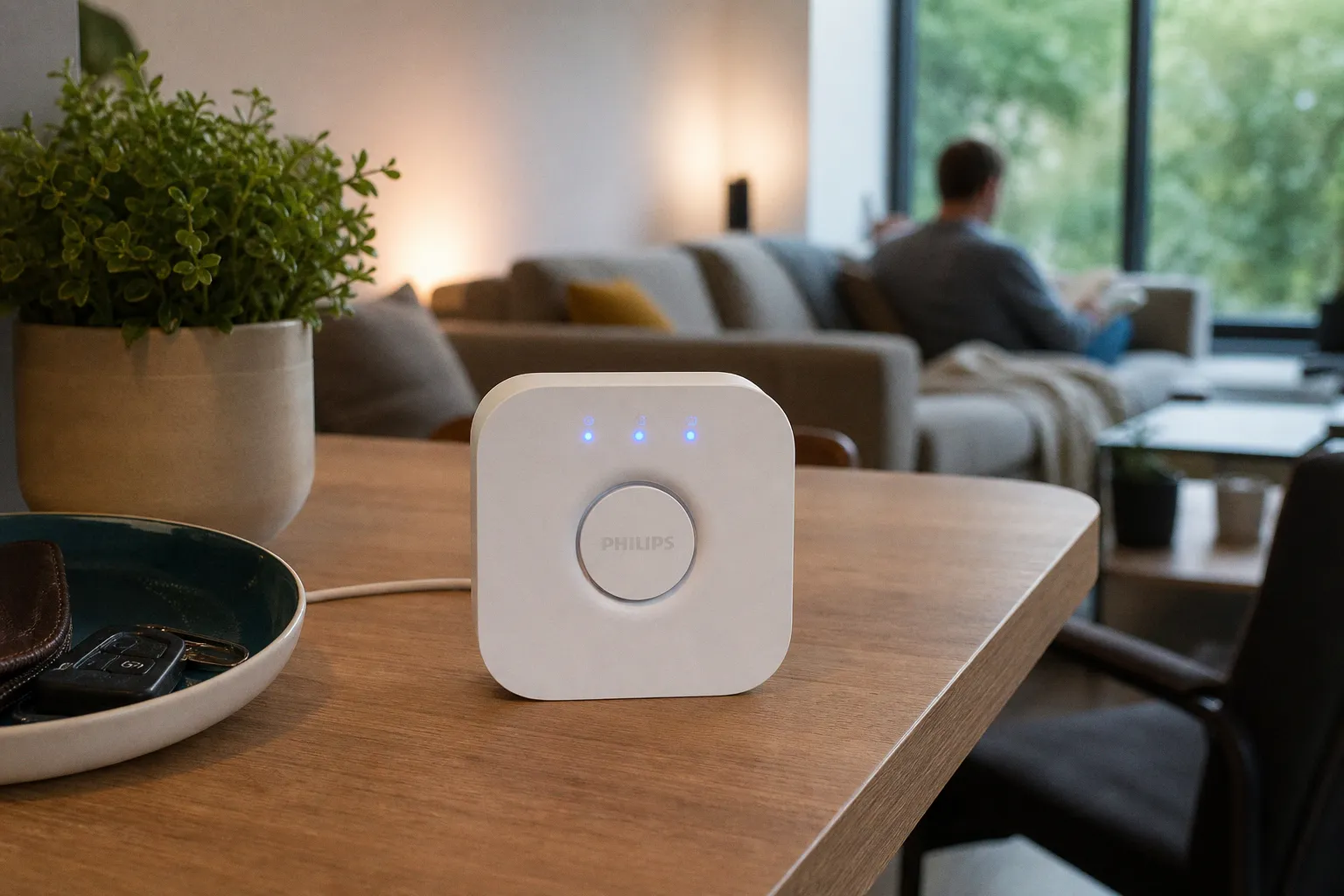
A smart-home hub that accepts a firmware payload and then parks itself on a solid red LED is not having a “minor connectivity issue.” It is a failed update path — and Philips Hue Bridge Pro owners caught by June’s faulty release have learned the hard way how much infrastructure is hiding behind a light switch.
Signify says it will replace affected Hue Bridge Pro hubs free of charge, regardless of warranty status. Fewer than 100 devices worldwide were affected, but the recovery cost is larger than the number suggests: a replacement hub has to be configured from scratch, including its lights, accessories, shortcuts, and schedules.
The failure was narrow. The recovery is not.
The reported trigger was unusually specific: automatic updates had to be disabled, the Bridge Pro had to remain on older software for an extended period, and the June firmware then had to be manually installed after sitting on the bridge for more than 10 days. That sequence led some units into an unrecoverable state.
Philips is rolling out another update intended to prevent further failures. Good. But “rare edge case” is not a satisfying label when the affected box is the logic gate for an entire lighting deployment. A Bridge Pro can manage up to 150 lights and 50 accessories; rebuilding that graph means re-pairing hardware and reconstructing automation logic that may have taken months to tune.
The practical move is brutally unglamorous: if your Bridge Pro has automatic updates disabled, check its current firmware state before manually pushing a long-pending update. A hub is not a bulb. Treat its update queue like production infrastructure, not a notification to clear between coffee and a meeting.
Replacement hardware does not restore your automation graph
A free swap solves the dead hardware, not the configuration payload that died with it. Owners should document their current setup while the bridge is healthy: rooms, zones, scenes, accessory assignments, schedules, and any shortcuts that trigger lighting behavior. The more elaborate the deployment, the less acceptable “set it up again” becomes as a recovery plan.
This is the awkward reality of many polished smart-home ecosystems. Their automation layers are often easy to build and hard to export. A bridge can orchestrate physical devices, but its own state remains a single point of failure — exactly the kind of walled-garden dependency that turns a bad update into a weekend project.
That tension is showing up well beyond connected homes. The states’ challenge to the Paramount–Warner Bros. merger is a very different story, but it runs on a familiar question: what happens when control concentrates in one opaque system?
Firmware promises need a staging mindset
There is a useful contrast in this week’s ecosystem news. Airversa has announced a Humelle humidifier that connects directly to Apple Home through HomeKit over Thread, while promising Matter support in a future firmware update. Google Home, meanwhile, has rolled out version 4.20 with suggested automations and improved camera-light controls.
Both are reminders that smart-home value increasingly arrives as software. That does not make firmware inherently suspect; it makes update policy part of the buying and setup decision. Thread’s local communication may reduce dependence on Wi-Fi for device control, but it does not remove the need to evaluate how a vendor ships changes, handles failures, and supports hardware after a bad rollout.
For Hue Bridge Pro owners, the immediate action is clear: a solid red LED after the affected update means contacting Philips support for the replacement process. For everyone else, the lesson is architectural. Keep automatic updates enabled where the vendor’s recovery model depends on them, avoid letting critical hub updates age indefinitely, and preserve a human-readable map of your automations before the controller becomes the thing that needs replacing.