Eufy C15 robot lawnmower review: simple setup, smart AI mowing, and sub-£1,000 appeal
Sub-£1,000 is the only hard pricing threshold currently attached to the Eufy C15 robot lawnmower review circulating via MSN and NationalWorld.
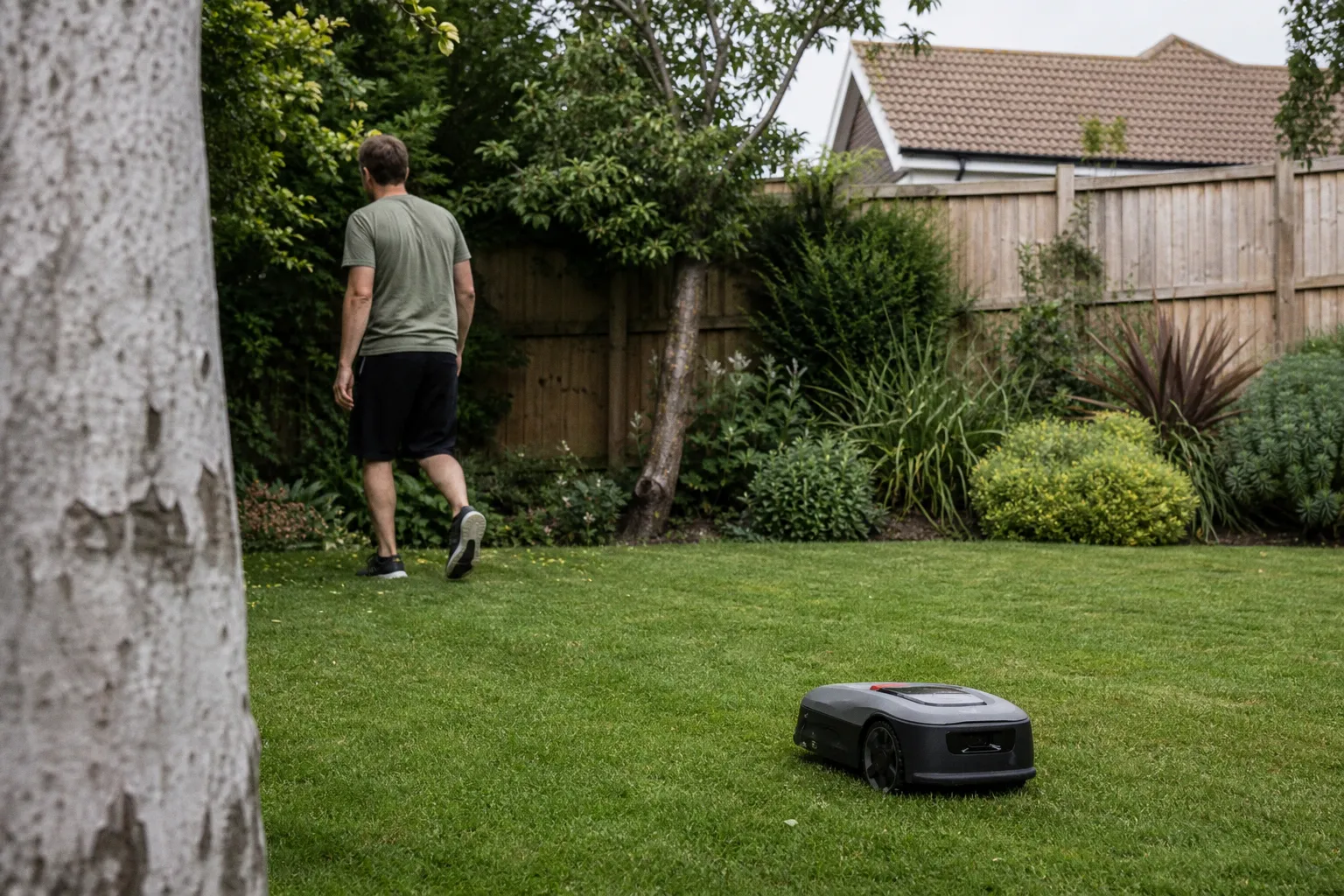
The C15 pitch is setup simplicity, not proven performance
The Eufy C15 is being positioned as a robot lawnmower with simple setup, AI-assisted mowing, and pricing appeal below £1,000. That combination matters because robotic mowing has historically split into two camps: cheaper units with more installation friction, and more advanced navigation systems that push the price higher.
But the available evidence does not include the operational details that would make or break the C15 in a real garden. There are no confirmed figures for coverage area, boundary handling, slope tolerance, runtime, charging behavior, obstacle avoidance accuracy, app permissions, or local-versus-cloud control. There is also no disclosed benchmark for how its “AI mowing” was tested.
That term needs pressure. In smart-home hardware, “AI” can mean anything from basic object classification to route optimization to marketing copy wrapped around a camera or sensor stack. Without test conditions, false-positive rates, recovery behavior, or failure cases, the claim should be treated as unverified.
The competitive signal: LIDAR and discounts are setting buyer expectations
The C15 item is not appearing in isolation. A separate YouTube listing highlights the 2026 Mammotion LUBA mini 2 AWD as a robot lawnmower with LIDAR. Another retail-focused item from 9to5Toys points to a Worx Landroid robot mower being discounted by more than $410.
Those two signals frame the market pressure around Eufy’s mower. Navigation technology is becoming a visible differentiator, and price cuts are making older or rival systems harder to ignore. If Eufy is trying to land under £1,000, the relevant question is not whether that sounds attractive. It is what has been removed, simplified, or automated to hit that band.
For connected-living buyers, the checklist is narrow. Verify how the mower maps the lawn. Verify whether it needs boundary wire or external positioning hardware. Verify what happens at edges, narrow passages, wet grass, toys, pets, and interrupted wireless coverage. Verify whether video, map data, or telemetry leaves the device ecosystem. None of those answers are present in the available snippets.
Buy-or-skip status: hold until the missing data is published
The C15 may be a useful product if the setup process is genuinely low-friction and the mowing logic holds up across uneven consumer gardens. The reported sub-£1,000 appeal gives it a clear lane against higher-end robotic mowers. But price alone is not a performance metric.
At this stage, the safe position is binary: do not buy on the review headline alone. Wait for measurable evidence: navigation method, cut consistency, obstacle detection behavior, app reliability, privacy controls, and maintenance requirements. A robot mower is an autonomous outdoor device with blades, sensors, wireless control, and recurring access to a private space. That requires more than a clean setup claim.