Choosing the Right Smart Speaker: A Practical Guide to Ecosystems
According to WIRED’s latest smart-speaker testing, the choice is still less about finding a single “best” cylinder and more about selecting the voice stack your home can actually execute.
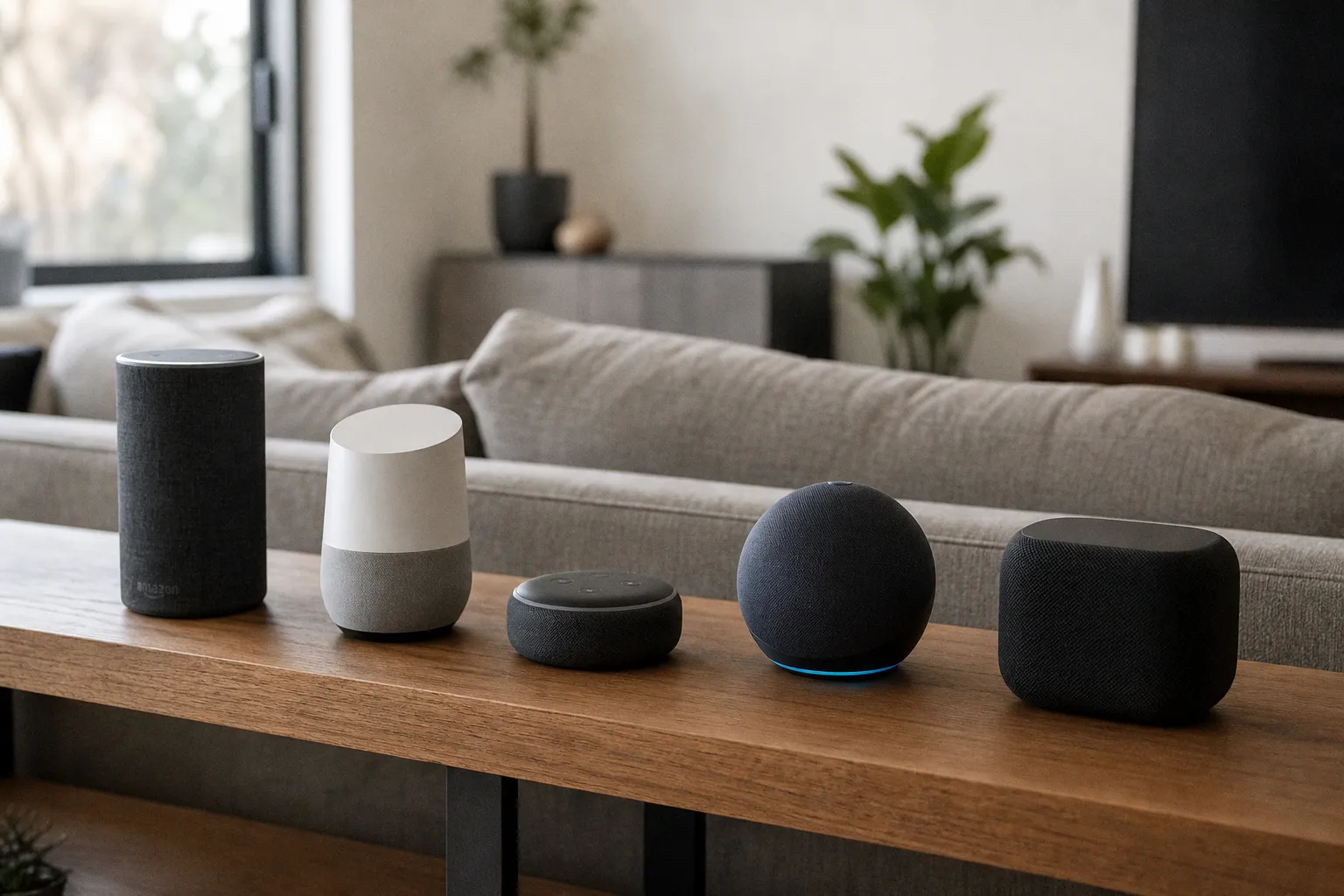
Amazon, Google, and Apple all have viable hardware, but their assistants, device fleets, and subscription gates produce very different automation paths. Buy for the triggers and payloads you need—not the fabric colour.
Google’s new speaker changes the logic gate
WIRED has added the 2026 Google Home Speaker to its picks after testing it, describing a device that borrows familiar elements: a compact form reminiscent of Apple’s HomePod Mini, tap controls, and colours associated with the older Nest Mini. The more consequential change is under the grille: it uses Google Gemini as its default assistant rather than Google Assistant.
That matters because an assistant is the natural-language layer sitting in front of every routine, query, and correction. WIRED found Gemini more human-sounding and better able to handle contextual requests, such as checking a schedule or asking which version of a song someone means. It can also be verbose. A conversational interface is not automatically a useful interface when all you wanted was a lamp command at 11 p.m.
The catch, naturally, is the paywall. Google’s Gemini for Home is free, but Google Home Premium places some smart-home assistant functions behind Standard and Advanced plans. Gemini Live—the mode intended for extended back-and-forth conversation—is among the features a household may want but cannot treat as a simple speaker capability. Before making Google the control plane, map which routines need basic commands and which depend on the subscription layer. Closed features are a terrible dependency to discover after the hardware is installed.
Ecosystem first; speaker second
WIRED’s broader conclusion is refreshingly unglamorous: phone compatibility and existing kit should be central to the decision. Apple and Android users may already have an obvious ecosystem fit, while Alexa remains attractive to households already running Amazon’s large speaker lineup. Amazon has introduced multiple models in many years since the first Echo arrived in 2014; Google and Apple offer narrower selections.
That range is not just a retail-shelf detail. More devices can mean more placement options, but it does not repair a mismatched automation graph. A speaker in every room is merely an expensive way to repeat a command if the underlying routines cannot reach the lights, sensors, lock, or thermostat already deployed.
The useful buying test is therefore blunt: identify the device that will supply the trigger, the platform that will run the logic, and the endpoint that receives the action. BGR notes that Google Home, Amazon Alexa, and Apple Home can host routines involving equipment such as contact sensors and smart thermostats. It also points to schedules, geofencing, and IFTTT applets as ways to connect actions across devices. Those are the workflows worth validating before choosing a voice assistant.
Even the product positioning around a speaker can look polished without answering that systems question—a familiar tension in premium e-commerce strategy.
Interoperability is finally a feature to watch
The most encouraging signal is not another assistant persona. IOT Insider reports that a Silicon Labs and Signify collaboration will let select Philips Hue bulbs support Zigbee and Matter over Thread concurrently on one device. In plain automation terms, that is a bid to keep a lighting endpoint reachable across more than one smart-home route, rather than forcing the household into a single protocol lane.
That makes speaker selection slightly less permanent—but only slightly. Matter over Thread and Zigbee support can improve interoperability, yet the assistant still determines how routines are authored, what data it can use, and which features are metered. Treat the voice hardware as an interface, not the architecture.
The smart purchase in 2026 is the speaker that fits the home you have and the automations you can verify today. Everything else is marketing wrapped around a microphone.