Abode Edge Camera Leverages Wi-Fi HaLow for Long-Range Security
Wired's report does not detail resolution, frame rate, or compression standards.
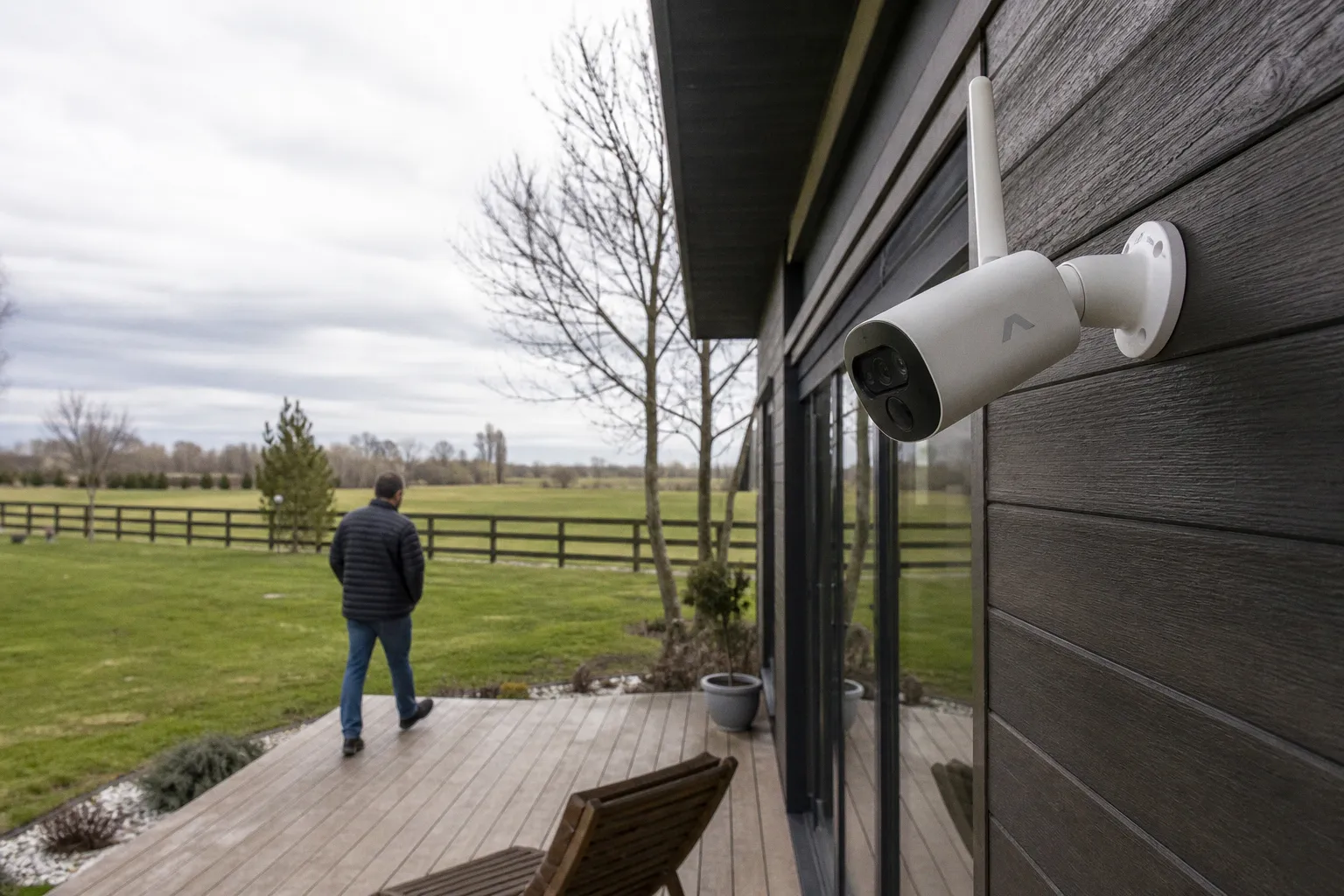
Wi-Fi HaLow just entered the consumer security camera market. According to Wired, the Abode Edge Camera is the first consumer unit to ship with the IEEE 802.11ah protocol, claiming a maintained connection at distances up to 1.5 miles from its base station. For anyone running cameras across acreage, gated driveways, or detached structures, this is the first hardware built specifically to kill the range bottleneck that traditional Wi-Fi simply cannot solve.
The Protocol Shift
Wi-Fi HaLow operates in the sub-1 GHz spectrum — a dramatic departure from the 2.4 GHz and 5 GHz bands that every other consumer camera piggybacks on. Lower frequency means longer propagation and better obstacle penetration, trades that come at the cost of raw throughput. The Abode Edge Camera is positioned not as a 4K streaming workhorse but as a persistent link for remote monitoring where a standard mesh node or extender cannot physically reach. That distinction matters: this is a coverage camera, not a bandwidth camera.
Without those metrics, a throughput-versus-latency assessment is impossible. What is confirmed is the architectural bet — HaLow's sub-GHz advantage applied to a consumer price point for the first time.
Where It Actually Fits
The target use case is narrow but underserved: large rural properties, farm outbuildings, long driveways, and industrial outposts where running Ethernet or placing a mesh satellite is impractical. The 1.5-mile figure is a line-of-sight claim; real-world range will degrade with foliage, construction materials, and interference profiles. Anyone already invested in the Abode ecosystem has a direct on-ramp. Outside that, the question is whether the base station integrates with third-party platforms or locks the camera into a single vendor's stack — a detail the current reporting does not address.
For urban and suburban deployments under 100 feet, HaLow offers zero advantage over existing Wi-Fi 6 mesh setups. The protocol solves a distance problem most households do not have.
The Protocol Bet
HaLow adoption in consumer devices has been negligible. If Abode proves that sub-GHz connectivity can be packaged at a mainstream price with acceptable image quality and low latency, other manufacturers will follow — and the fragmented long-range camera segment gets a real standard. If the camera underdelivers on compression or proves unreliable at the outer edge of its range envelope, HaLow gets shelved alongside other promising protocols that never hit scale.
The only verdict that matters arrives once independent stress tests confirm throughput stability at distance. Until then, the Abode Edge Camera is a technically interesting first mover and an unverified range claim.