Best robot lawn mowers without perimeter wire for 2026
If you have ever looked at your lawn on a hot Saturday and thought, “I would pay a lot to not spend the weekend wrestling with mower lines,” the 2026 robot mower conversation is finally getting more practical.
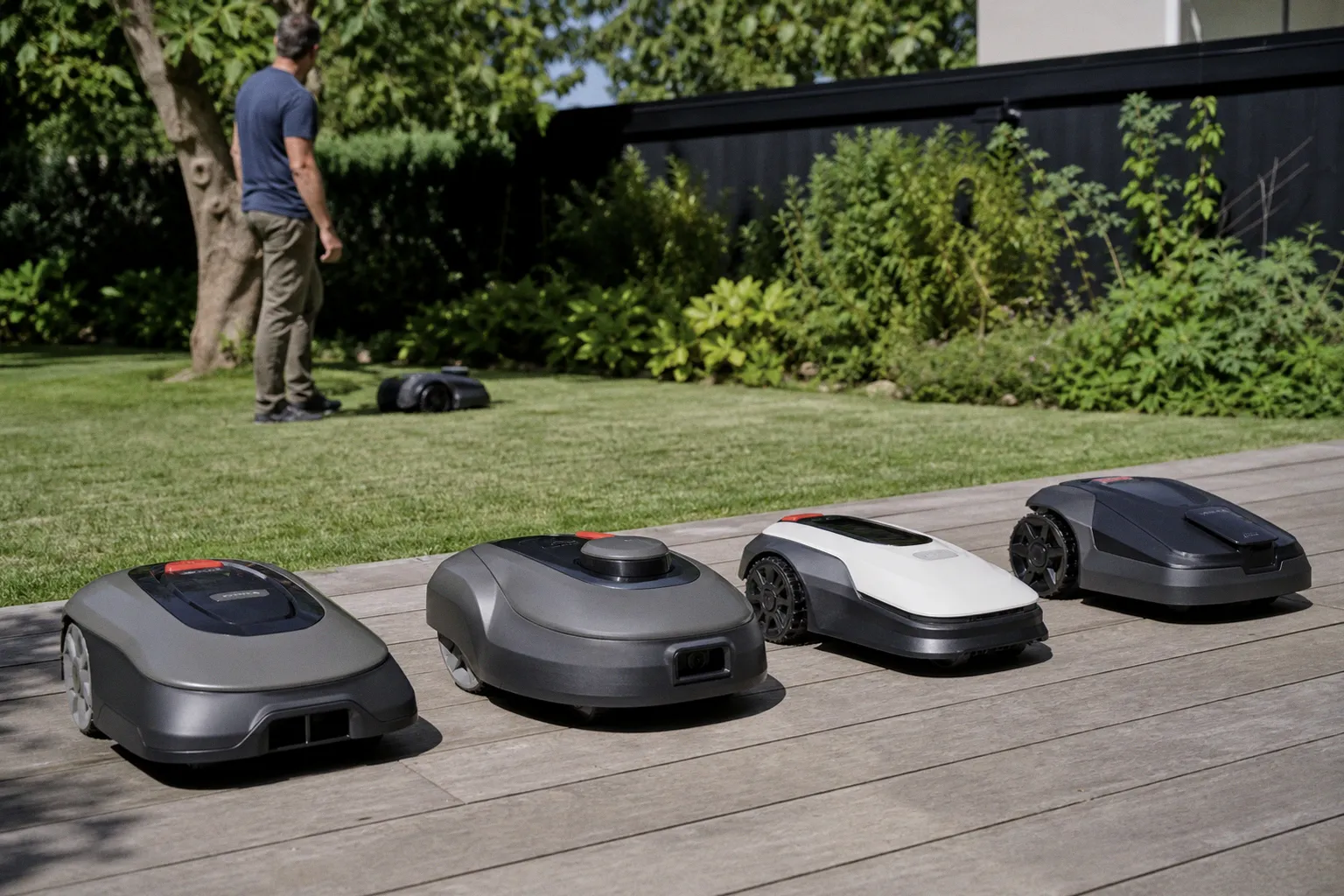
Wire-free no longer means effortless
The big shift is simple: robot lawn mowers are moving away from the old buried-wire setup, which was often the least appealing part of the whole idea. Instead of spending a weekend cutting into the edge of the lawn, newer models use virtual boundaries created through systems such as RTK, LiDAR, cameras, or a mix of navigation tools.
The Gadgeteer’s 2026 comparison names the Segway Navimow i110N as the best option for most small yards in its set, citing RTK plus vision navigation and a verified price of $789. It also points to the Husqvarna Automower 410iQ at $1,549.99 for half-acre coverage with an EPOS reference station, the ECOVACS Goat A2000 LiDAR PRO at $1,599 for dual-LiDAR auto mapping, edge trimming, and obstacle avoidance, and the eufy Robot Lawn Mower E15 at $1,199.99 for vision navigation without a buried wire or external RTK station.
That sounds tidy on paper, but the important household truth is that “no perimeter wire” does not mean “no setup.” You still need to map the lawn, place the charging dock well, and make sure the mower can reliably understand where grass ends and trouble begins. A neat quarter-acre lawn is a different job from a tree-heavy yard, a half-acre space, or a garden with narrow passages.
Match the mower to the mess you actually have
This is where I would slow down before tapping buy. The Gadgeteer makes a useful distinction that RTK, LiDAR, and vision-only mapping are not interchangeable labels, and that matters in the kind of small, annoying ways that decide whether a smart appliance becomes part of your routine or gets parked in the shed.
RTK is described as strongest when the mower has a clear satellite view. LiDAR is framed as helpful when mapping and obstacle awareness are the priority. Vision-only systems are appealing because they avoid an external station, but they need clear grass boundaries and lighting the camera can read.
So the real checklist is not just “does it mow?” It is whether your lawn has shade, tree cover, slope, narrow paths, Wi-Fi coverage, and a sensible place for the dock. It is also whether your yard regularly has pet toys, kids’ clutter, or other objects sitting in the grass. Reviewed’s recent mower coverage adds another reminder from the practical side: one robot lawn mower can mow in the dark, but shade is still something to watch. That is exactly the kind of everyday condition spec sheets can make feel smaller than it is.
Deals are tempting, but security belongs in the cart too
There is also a buying-season nudge happening. One News Page reports that Home Depot’s Fourth of July lawn mower sale includes 67 discounted mowers, with up to $700 off robot models. That kind of discount can make a wire-free mower feel much easier to justify, especially if you are comparing it with the cost, noise, and storage hassle of traditional lawn gear.
But this category is now fully part of the connected home, and that brings connected-home responsibilities. Kaspersky has flagged what it calls an unpatchable backdoor in Yarbo robot mowers. The available snippet does not give the full technical detail, so I would not stretch that into a blanket warning about every mower. Still, it is enough to remind buyers that app-controlled garden machines deserve the same basic scrutiny as indoor smart devices.
For most households, the best move is to treat a robot mower less like a seasonal toy and more like an outdoor appliance with software, sensors, and a long job to do quietly. If your lawn is small and simple, the Segway pick highlighted by The Gadgeteer looks like the value starting point. If your yard is larger, shaded, messy, or full of awkward edges, the smarter purchase may be the one that maps and avoids obstacles more confidently — even if the sale price is not quite as soothing.