Best Smart Lights for 2026: Major Upgrades for Any Home
The old smart-light failure mode is still painfully familiar: you buy the “best” bulb, then discover it is bright enough for a hallway, useless outdoors, allergic to your platform, or hiding its best triggers behind a hub.
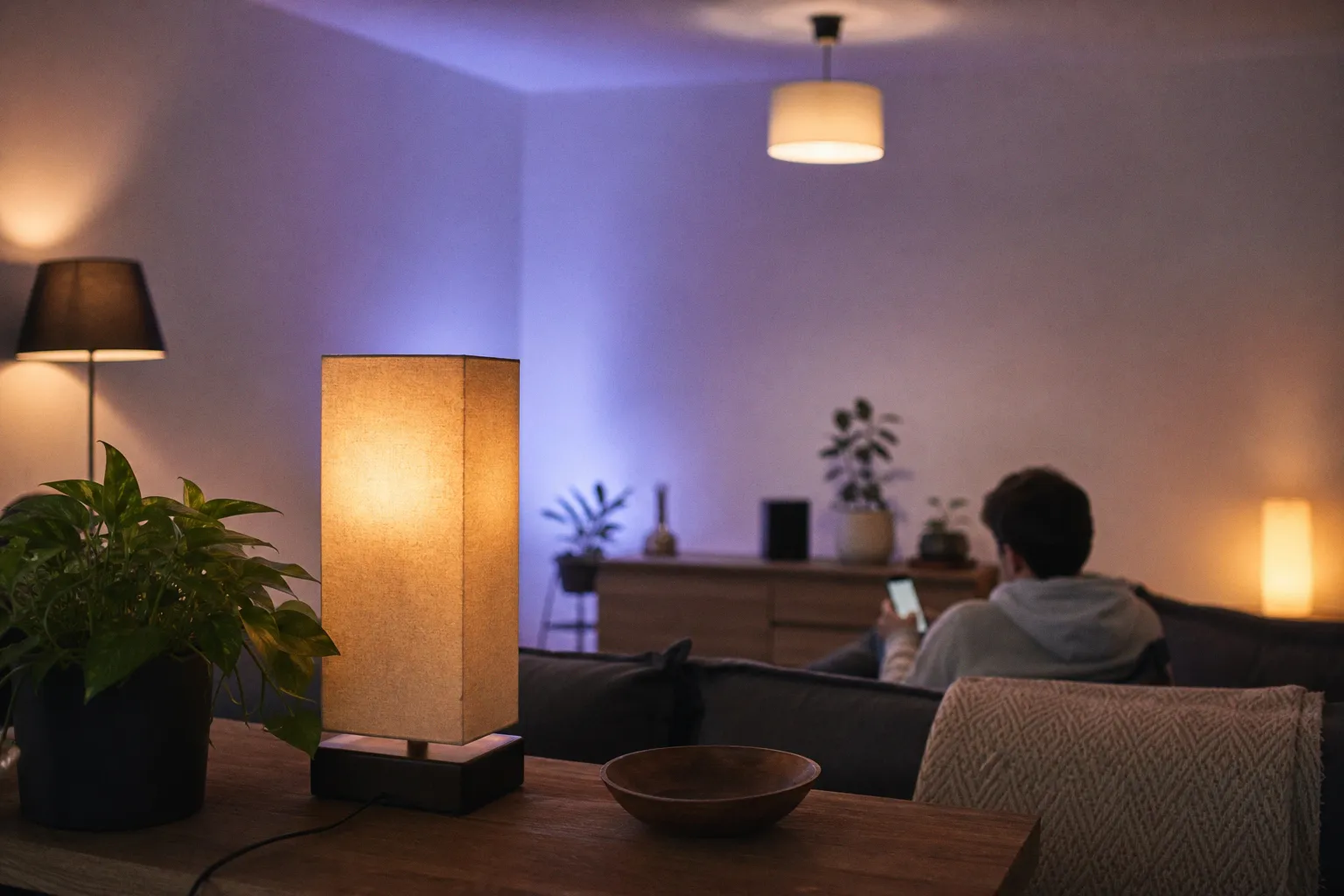
The bulb is no longer the whole system
CNET’s testing points to a simple split: some homes need one cheap color bulb; others need a lighting layer that can run schedules, brightness changes, color scenes, and music syncing without becoming another brittle app island.
The Wiz color A19/E26 bulb is called out as a practical standard-bulb pick, with CNET noting it lands around the low-cost end and adds millions of colors for only a small step up from the non-color version. That matters because A19/E26 is still the everyday lamp-and-ceiling-fixture path for a lot of homes. If you are replacing a dumb bulb, this is the low-friction branch in the decision tree.
But the more interesting signal is how many “best light” categories now depend on form factor. Philips Hue gets attention for a smart floodlight option aimed at larger indoor spaces. GE Cync’s Dynamic Effects floodlight is described as using four quadrants that can each show different colors, which turns the bulb itself into a scene engine rather than just a dimmable endpoint.
That is a different payload. You are no longer just sending on, off, and set_brightness. You are designing ambience: movie night, parties, dinners, holiday scenes. If your automations already branch by time, occupancy, or room mode, multi-zone lighting gives those logic gates something more useful to trigger.
Hubs are not dead — they just need to earn their rack space
The usual smart-home advice says “avoid hubs when you can.” Fair. One more bridge often means one more firmware queue, app login, and failure point. But CNET’s Philips Hue bundle note is a reminder that a hub can still justify itself when it unlocks a capability the bulb cannot handle alone.
The Philips Hue Bridge Pro is highlighted for presence sensing when three connected lights are in the same room. According to the source, the lights can turn on or off based on activity they detect by reading Wi‑Fi signals, without separate motion detectors.
That is the kind of hub feature worth paying attention to because it changes the automation topology. A normal motion sensor fires a discrete event: movement detected, timer starts, light turns off later, someone complains from the sofa. Presence sensing promises a softer signal: room activity inferred without sticking another puck to the wall.
The caution: do not buy the bridge because it says “pro.” Buy it only if the supported room layout and light count match the feature you want. Three connected lights in the same room is not a footnote; it is a requirement that shapes the install. If your target is a single bedside lamp, the hub is probably overhead. If you are wiring a living room scene with multiple fixtures, it becomes a possible control plane.
Brightness, outdoors, and platform fit are the real filters
CNET’s list also flags the Tapo color bulb at 1,100 lumens, positioning it for darker spaces, craft rooms, or workbenches where brightness matters more than another rainbow preset. That is the spec to check before you script anything. A perfect automation attached to an underpowered bulb is just a beautifully scheduled disappointment.
For outdoor use, CNET favors a Lifx model combining a 1,100-lumen rating with IP65 weather resistance. It supports Wi‑Fi without an indoor hub and works with Alexa, Google Home/Gemini, and Apple Siri, while allowing color and color-temperature changes. The source also notes buyers should confirm the socket supports a BR30/E26 bulb design.
That last line is the unglamorous bit that saves the weekend. Before choosing an outdoor smart bulb, verify three things: weather rating, socket/form factor, and platform support. If any one fails, your automation graph breaks at the physical layer.
There are also non-bulb options in the roundup. Ikea’s doughnut-shaped lamp can hang on a wall or sit on a table, connects to platforms such as Apple or Google Home, and supports phone-based brightness and color control. Govee’s newer light strip is noted as a strong choice when you want a specific strip length with smart features.
So the 2026 smart-light upgrade path is not “replace every bulb.” It is more surgical: standard bulbs where cost and simplicity win, floodlights where room coverage matters, strips where geometry matters, outdoor-rated hardware where the environment is hostile, and a hub only where it unlocks a real automation primitive. Start with the fixture, define the trigger, then buy the endpoint. That order still beats app-first shopping every time.