How Smart Appliances Are Simplifying Home Routine
Another week, another appliance promising to “simplify” the home — and this time the useful bit is not the touchscreen garnish, it is the routine logic underneath.
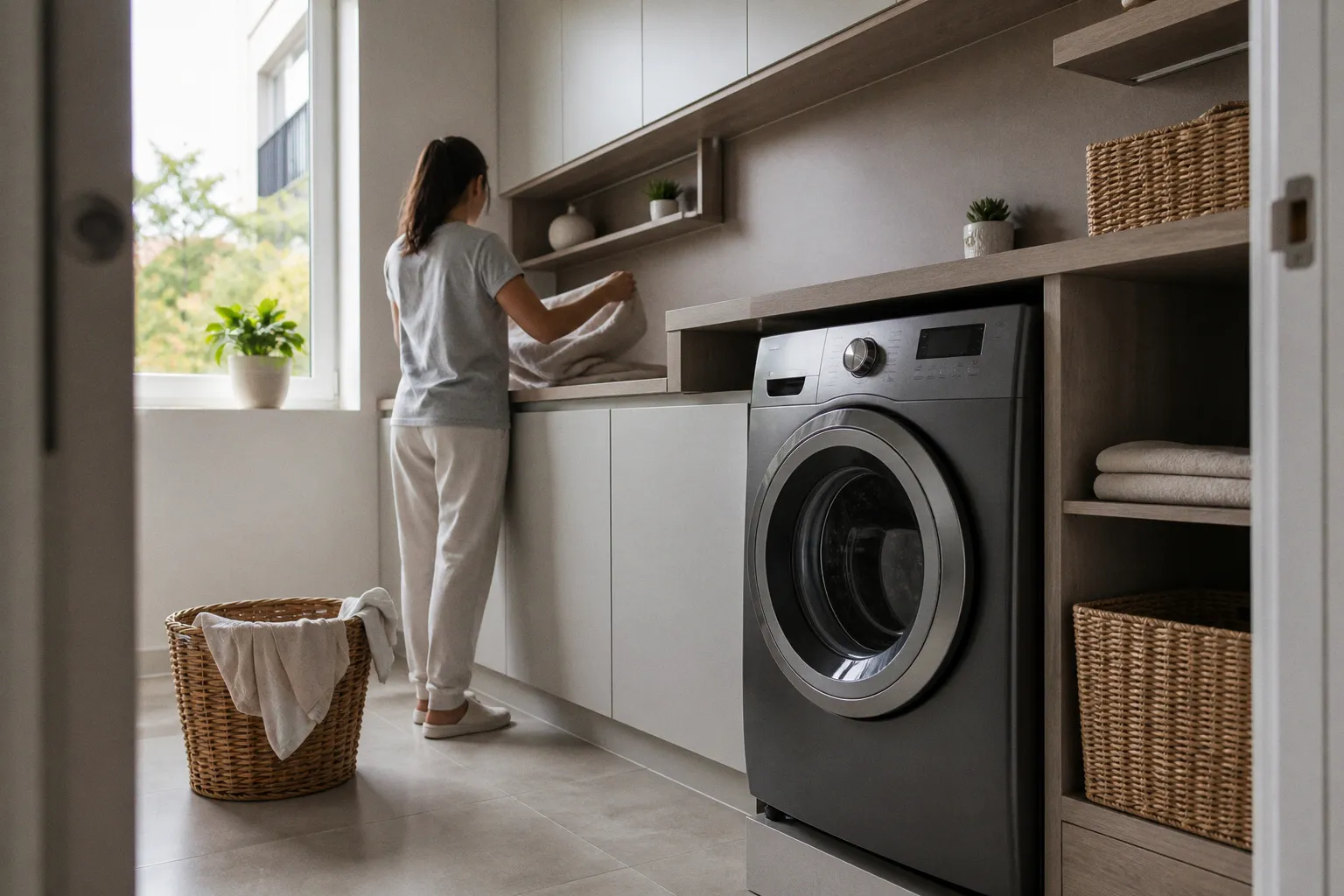
The appliance is becoming a workflow endpoint
The strongest example in the source material is laundry, which remains one of those domestic loops where bad software usually just adds taps. Samsung’s connected washers are described as using SmartThings to help select a cycle based on garment type, color, and dirt level. The app can recommend programs for different fabrics, from baby clothes to jeans or school uniforms, and send a notification when the wash finishes so clothes do not sit forgotten in the drum.
That is the part worth watching. A smart washer does not need to be glamorous; it needs to turn “remember to move the laundry” into a clean event. End-of-cycle notification is a basic payload, but it is also the difference between automation that lives in a demo video and automation that actually saves a household from mildew and rework.
The report names Samsung’s AI 12.5 kg Control washer, aimed at smaller spaces, and the Bespoke AI Laundry 26 kg, which is described as including an interactive display and sensors that adjust detergent and softener according to the load. Those details matter because the useful intelligence is split between recommendation and actuation: one system suggests the cycle, another adjusts inputs. When those two layers cooperate, the appliance starts behaving less like a standalone machine and more like a node in the home’s operating system.
The fridge wants to be the inventory API
The same report highlights Samsung’s Family Hub refrigerator, which uses an integrated camera so users can view stored food from a phone. It can also suggest recipes based on available ingredients and automatically generate a shopping list.
That is the kitchen automation dream in plain clothes: inventory in, recipe logic out, shopping list as the next action. The problem, as ever, is whether the data is portable enough to be useful outside the vendor’s preferred garden. A fridge that can show you milk on a phone is convenient. A fridge that can feed inventory state into broader meal planning, shared lists, and household routines is far more interesting.
For buyers, the spec sheet question should be blunt: can the appliance expose events and states in a way your existing setup can use? If the shopping list only lives in one branded interface, that is not a workflow; it is a cul-de-sac with push notifications.
Market noise is rising, but integration is the filter
The wider appliance category is clearly being pulled toward connectivity. The Anmo Sugoi report says the connected product segment has tripled in size since 2020, driven mainly by AI devices intended to optimize daily tasks. It also cites 27% growth in connected devices in the region during 2025, with Samsung sales of connectivity appliances up 43% over the same period.
Other market signals are circling the same kitchen-and-routine territory. EIN News reports a toaster market forecast of US$6.2 billion by 2033, tied to rising adoption of smart kitchen appliances. openPR.com reports a smart hydration devices market forecast of USD 1.1 billion by 2035. Those snippets do not give enough detail to judge the underlying methodology, but they do show the direction of travel: more ordinary household objects are being pitched as connected routine managers.
The practical filter is simple. Before buying the “smart” version, check the automation surface. Does it work through a platform you already use, such as SmartThings in the Samsung examples? Can it trigger useful routines — lights dimming, TVs turning off, blinds closing at a scheduled family time, as described in the report — without forcing every action through manual app babysitting? Can it coordinate with devices from other brands, or does it only behave when the whole house wears the same logo?
Smart appliances are not simplifying home routine because they are smart in the abstract. They simplify it when they collapse repetitive decisions into reliable triggers: wash done, detergent adjusted, food visible, list generated, night routine executed. Everything else is interface theater.