ZemiSmart Releases Matter IR Blaster and AC Controller for Legacy Appliances
A familiar automation failure: the living room is on Matter, the old air conditioner is still waiting for someone to point a plastic remote at it.
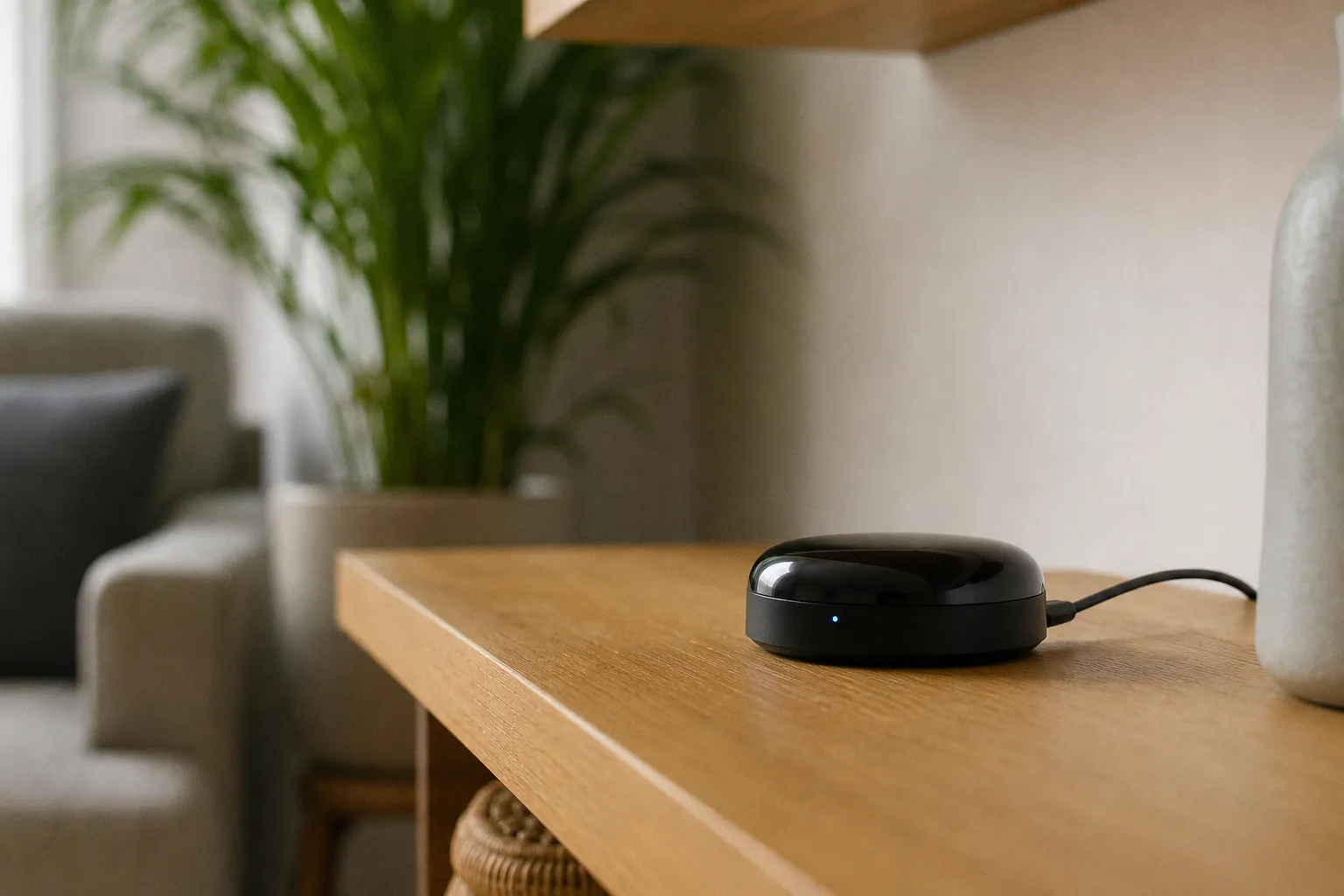
Matter reaches for the remote-control drawer
The confirmed detail here is narrow but important: ZemiSmart has released a Matter IR blaster and AC controller for legacy appliances. No reliable source text in the pack gives model numbers, supported platforms, pricing, availability, or setup behavior, so those stay off the table for now.
Still, the category tells us why this is worth watching. IR blasters exist to bridge the dumb-but-functional layer of the home: air conditioners, fans, TVs, and other devices that never got an app, never mind a clean local API. The AC-controller angle is especially relevant because climate gear is one of the most painful categories to automate badly. Miss one state change, and your “smart” routine becomes a thermostat cosplay with no feedback loop.
Matter is the interesting payload label here. If ZemiSmart’s implementation exposes useful controls through Matter rather than trapping them inside a proprietary app, it could make legacy appliances easier to trigger from broader smart-home systems. That is the promise. The execution is where the gremlins usually live.
Don’t buy the badge before checking the control surface
For automation builders, the buying question is not “Does it say Matter?” It is: what exactly becomes visible to the rest of the home?
Before treating this as the missing bridge for an old AC unit, check whether the controller exposes the controls you actually need — power, mode, temperature, fan behavior, and whatever your daily automations depend on. The evidence available today does not confirm those details. It also does not confirm whether the device provides reliable appliance state handling, which is the classic weak point with IR-based setups: sending a command is easy; knowing what the appliance actually did is the hard part.
This is where bad smart-home software usually burns users. A shiny bridge gets added, the hub sees a device, and then the useful logic gates are missing. You can trigger “on,” but not build a sane evening cooling routine. You can send a command, but not verify the room responded. You can add it to an ecosystem, but only through a workflow that feels like duct tape over duct tape.
So the pragmatic move is simple: wait for the control map. Look for how the device appears inside Matter-compatible platforms, what actions are exposed, and whether AC behavior is modeled cleanly enough for routines rather than just remote-button replication.
The real win is keeping old hardware in the graph
This release lands in the broader smart-appliance conversation: newer appliances are increasingly designed around software, services, and consumer data, while design awards and green-tech narratives keep pushing the industry toward “smarter” homes. But most homes are not demo labs. They are mixed-protocol junk drawers with a few modern hubs, a few stubborn appliances, and one remote that keeps vanishing into the sofa.
That is why a Matter-labeled bridge for legacy appliances is more useful than another app-only gadget. It suggests a route where the existing appliance stays in service while the automation layer gets upgraded around it. For readers building real homes rather than showroom scenes, that is the sane path: integrate what already works, replace only what is actually blocking the system.
The next thing to track is not marketing language; it is behavior under automation. Does the controller expose enough commands? Does it behave consistently across ecosystems? Does it let routines run without forcing the user back into a vendor silo? Until those answers are confirmed, treat ZemiSmart’s release as a promising new adapter in the toolbox — not yet the final logic node for every legacy AC setup.