Samsung and LG's next China battle: Robot vacuums
You've probably noticed your robot vacuum options have quietly exploded over the past year or two — and if you've been loyal to Samsung or LG, you might be wondering why the price tags on their models suddenly feel harder to justify.
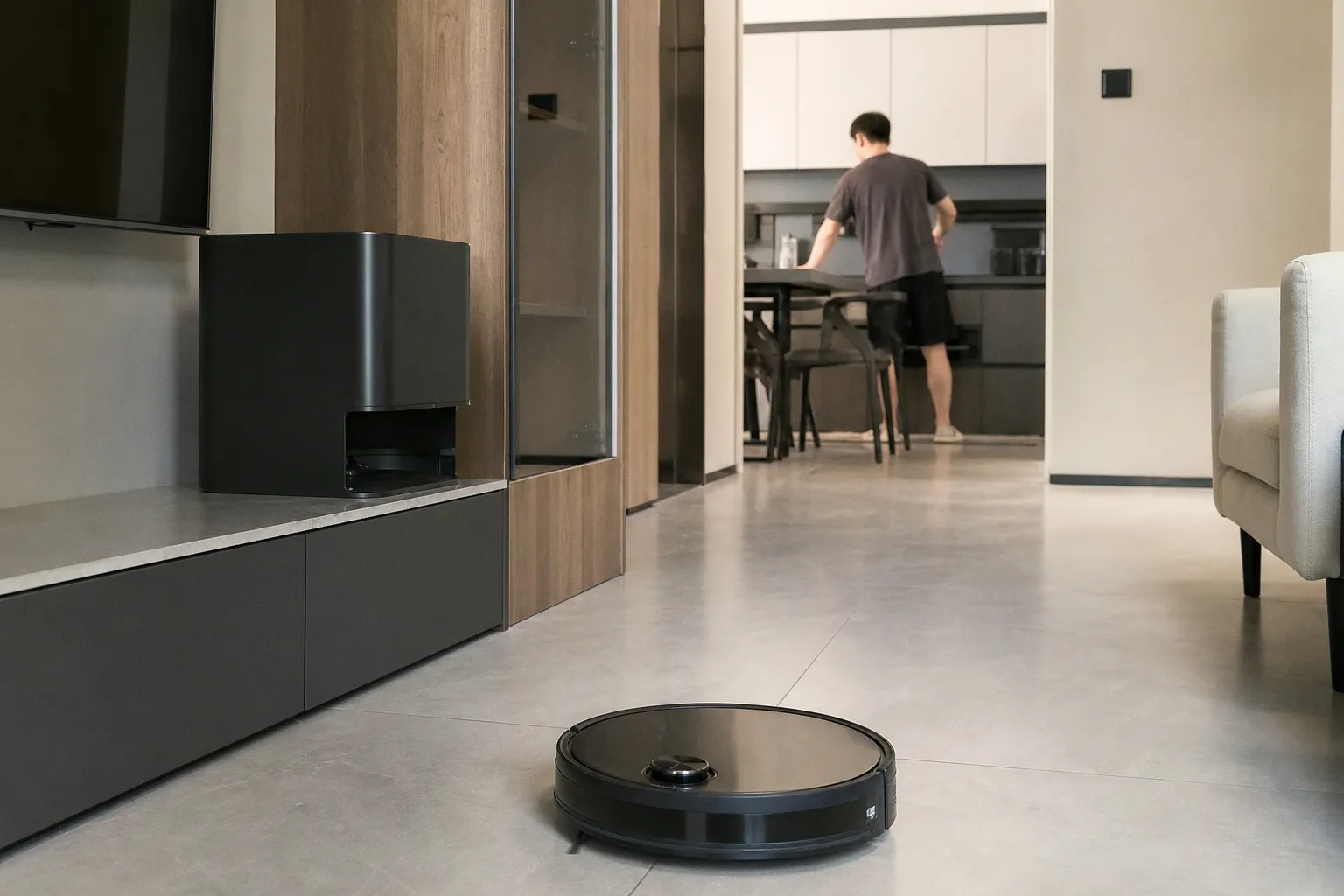
The Chinese Wave Has Already Arrived
The numbers tell a blunt story. According to customs data cited in Korean media, China exported roughly 7.75 billion yuan — about $1.1 billion — worth of cleaning robots in just the first quarter of this year. Brands like Roborock, Dreame, and Ecovacs have moved well beyond the budget corner of the market: all five of the world's top-selling robot vacuum makers are now Chinese, holding a combined 54.5 percent global share. Roborock alone sits at 17.7 percent and pulled in over 10 billion yuan in overseas revenue last year. Dreame claims the number-one spot worldwide for both sales volume and revenue in early 2026.
What this means in your living room is simple: the features that used to justify a premium — AI obstacle avoidance, auto-mop cleaning, self-emptying docks, even water supply and drainage — are showing up on machines at price points that would have seemed impossible three years ago. In South Korea alone, the robot vacuum market is expected to cross 1 trillion won (around $644 million) this year, more than double what it was in 2023, and Chinese brands moved early to capture both the high and affordable ends of that surge.
Where Samsung and LG Are Betting Their Edge
Samsung's recent move to launch a standard version of its Bespoke AI Steam robot vacuum — adding to the Ultra and Plus models rolled out earlier this year — looks like a direct attempt to cover more price tiers. But the deeper play isn't just hardware. Both companies are leaning hard on service as a differentiator.
Samsung Electronics Service topped Korea's most respected customer-service quality ranking for the 25th year running; LG defended its top position in home-appliance after-sales for three consecutive years. Both are now threading AI into that after-sales fabric. Samsung's SmartThings-connected Home Appliance Remote Diagnosis, for instance, lets AI analyze your vacuum's operation history in real time and either walk you through a fix or adjust settings remotely — no engineer visit required. LG, meanwhile, has been matching pace with its own AI-driven diagnostics and nationwide service infrastructure.
The pitch to you, the buyer, is essentially this: Chinese brands win on specs-per-dollar, but Korean brands are framing themselves as the safe, supported, privacy-conscious choice. An industry source quoted in Korean coverage put it more starkly — robot vacuums are becoming "AI appliances that move around the home and collect spatial and behavioral data." Samsung and LG are betting that data-trust matters to you.
What to Actually Watch Before You Buy
If you're shopping right now, the practical tension is real. Chinese-built vacuums from Roborock or Dreame will likely give you more suction, smarter mapping, and better dock features for the money. A Samsung or LG model may cost more at checkout, but you're buying into an ecosystem where remote diagnostics, long-term firmware support, and a local service network are baked in — and in Korea, those service networks are genuinely deep, covering even remote islands by boat.
Think about how much you value hassle-free upkeep. If a broken sensor on a budget import means weeks of shipping and back-and-forth emails, that upfront savings evaporates fast. If you're comfortable troubleshooting or your home is straightforward — no pets knocking things over, no complicated floor layouts — the Chinese brands' value proposition is hard to argue with.
The honest bottom line: the robot vacuum market is splitting into two lanes. One prioritizes aggressive features and pricing; the other prioritizes long-term support and ecosystem integration. Neither is wrong, but knowing which lane fits your household rhythm will save you from buyer's remorse more than any spec sheet will.