AI Home Appliances: Air Conditioners, Washing Machines, and Fans - Gimmick or Rigid Demand?
You see the word “AI” slapped on a new air conditioner or washing machine and your eyes glaze over. It’s the 2026 equivalent of “smart”—a marketing trigger designed to justify a price bump.
Deconstructing the AI Label: From Voice Wrappers to Core Logic
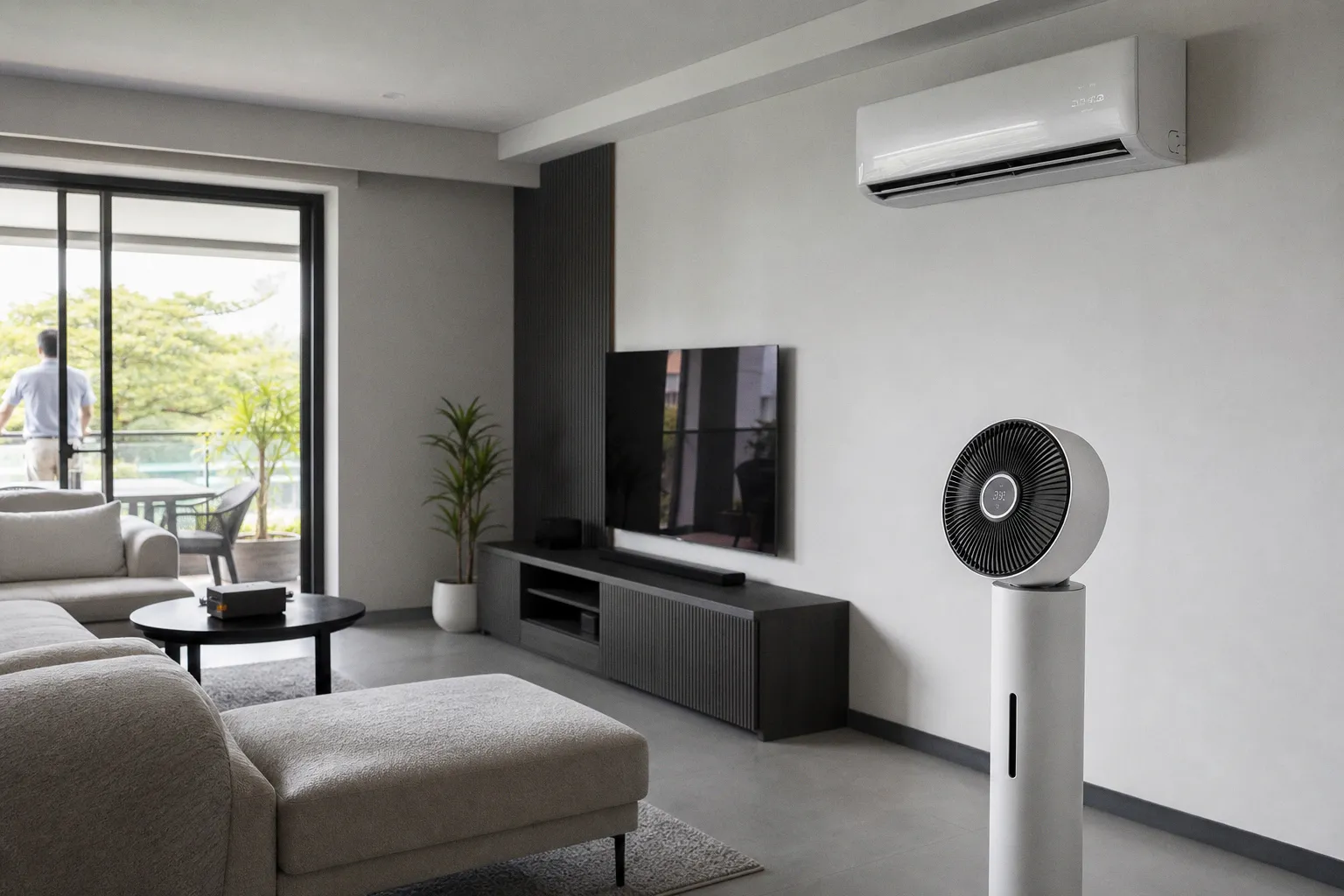
The initial layer is often just an interface upgrade. As reported, some budget-tier “AI” air conditioners essentially replace a rigid command syntax with a natural language processor. The trigger is no longer “Set temperature to 26°C”; it’s “It’s a bit hot.” The underlying action—the payload sent to the compressor—may be identical, but the logic gate that interprets intent is now more forgiving. This is low-hanging fruit, a UX improvement repackaged as intelligence. The real shift, however, occurs when the AI moves from parsing your voice to parsing the environment. Higher-end units are now deploying sensors for anti-direct-blow, humidity control, and dynamic energy-saving modes. Here, the system isn’t just waiting for a command; it’s executing continuous feedback loops based on real-time data streams. The differentiation is stark: one is a voice module, the other is an integrated control protocol.
The Smart Home Stack: Where AI Becomes a Protocol, Not a Feature
For the automation architect, the appliance itself is less interesting than its API endpoint. The source material notes that manufacturers like Midea are pushing connected features—remote control, usage monitoring, diagnostics—as standard. This is the foundation. True value emerges when that appliance becomes a callable service in your home automation system. Imagine a washing machine that doesn’t just finish a cycle but publishes an event payload: {"device": "washer_01", "status": "cycle_complete", "energy_used": 0.8, "load_weight": 5.2}. A well-designed automation script can then trigger downstream actions—send a notification, adjust the home’s energy profile for the next hour, or even log the data for maintenance prediction. The AI, in this context, is the logic engine that makes the appliance a cooperative node in a larger network, not a walled-garden gadget.
Demand Signals and the Hardware Pipeline
The market pressure is real. Reports indicate rising consumer demand for AI-enabled appliances in major markets, and external factors like extreme weather events are accelerating hardware cycles. Europe’s recent heatwave, for instance, created a buying frenzy for cooling systems, with China’s manufacturing base scaling to meet the surge. This isn’t just about selling more units; it’s about the specifications of those units. As supply chains race to fulfill demand, the baseline features—including better environmental sensors and connectivity—are being baked into the production pipeline. What was a premium feature set in 2024 is becoming the expected default. The risk for consumers isn’t buying a gimmick; it’s investing in a closed system that offers AI as a marketing term but not a durable, scriptable protocol.
The takeaway is tactical. When evaluating an AI appliance, ignore the PPT. Demand the specification sheet for its sensor array, its open API documentation (if any), and the granularity of its data logs. The goal is to determine if the AI is a self-contained black box or a functional module you can integrate into your broader automation schema. The former is a product with a fancy label. The latter is a legitimate upgrade to your home’s operational logic.