Secondary Battery Market Set for Strong Growth as Energy Storage and Electric Mobility Transform Global
If your phone dies mid-recipe and your robot vacuum gives up before it finishes the living room, you've already felt the quiet dependency we now have on rechargeable power.
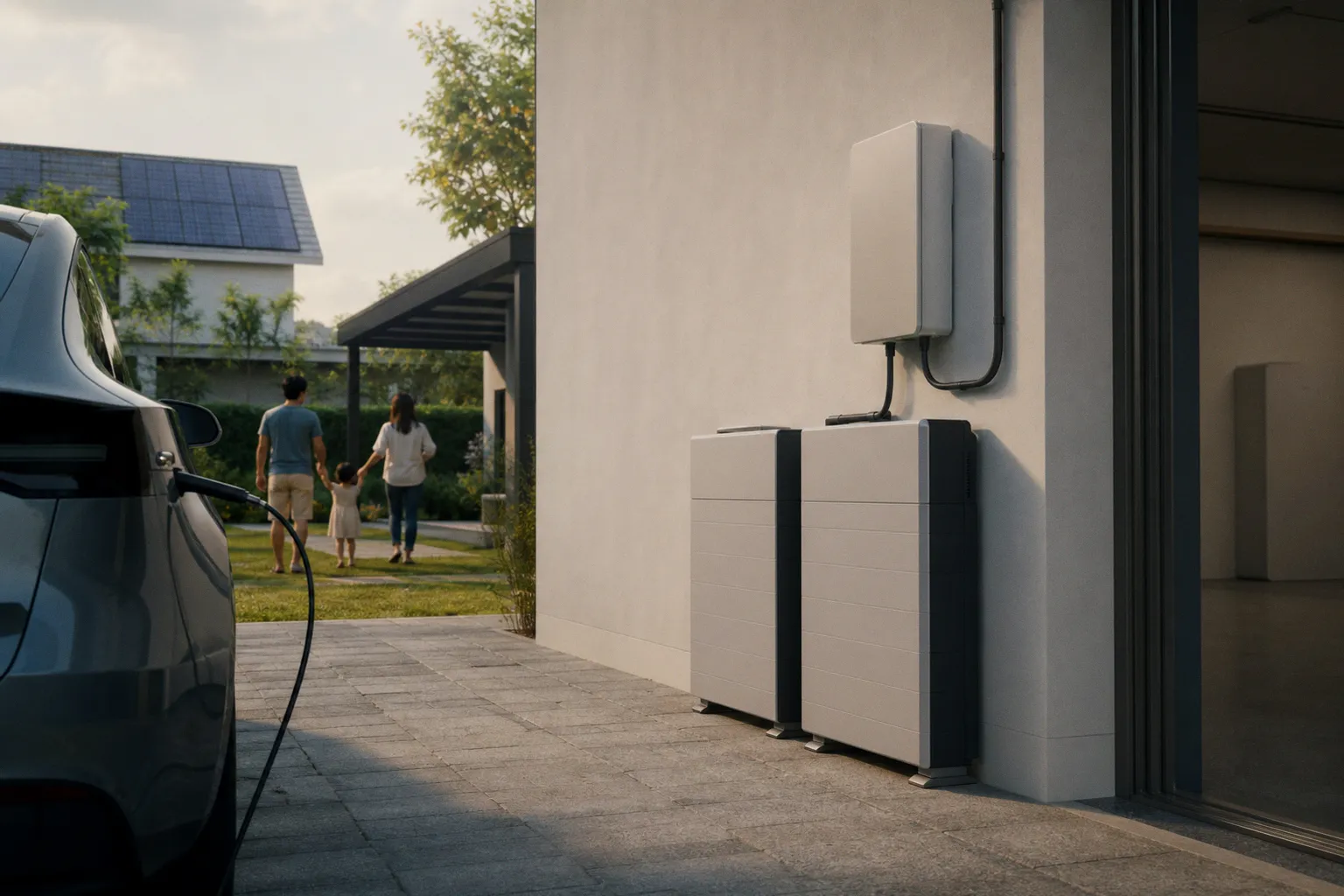
The rechargeable tech already running your home
A secondary battery is simply a rechargeable one — the kind you top up instead of toss. That single category quietly powers most of your connected life, from your smartphone and wireless earbuds to the cells inside an electric vehicle in the driveway and the wall-sized storage units that now pair with rooftop solar. The market analysis breaks these batteries down across lithium-ion, nickel-metal hydride, nickel-cadmium, and lead-acid chemistries, each offering different trade-offs in energy density, cost, safety, and lifespan.
For most readers running a smart home in 2026, you're living firmly inside the lithium-ion era. That's the chemistry in your handheld vacuums, your portable speakers, and the battery backup units that keep your Wi-Fi alive during a storm. It's also the same family of cells showing up in your smart doorbells and any home energy storage you might be eyeing.
Why the surge matters beyond the headline
The press release points to three forces pushing this expansion, and each one touches daily routines in ways worth noticing.
EV adoption is the loudest one. As more households run a plug-in vehicle, charging behavior at home becomes a household scheduling problem — the same outlet that charges the car overnight is the one your robot mop wants at 8 a.m. Battery makers are responding with denser cells and faster charging, and that technology tends to trickle down into the smaller packs in your power tools and cordless kitchen gadgets within a few product cycles.
Renewable storage is the quieter one, but it matters. Solar panels on the roof are only half the equation; the other half is a battery that holds onto that energy until evening. Grid-scale storage is scaling fast, but so are home batteries, which means the smart-home ecosystem is slowly merging with the home-energy ecosystem. Your thermostat, your EV, and your battery wall are starting to talk to each other.
Then there's recycling and longevity. The report highlights advances in battery management systems, recycling technologies, and next-generation materials. Practically speaking, that should mean your next rechargeable device lasts more charge cycles before it needs replacing — and when it does die, the materials are more likely to come back into the supply chain rather than sit in a junk drawer.
What to actually keep an eye on
A market growing this fast attracts noise as well as innovation. If you're shopping for anything from a new cordless stick vacuum to a home battery system, the practical filters haven't changed. Check the real-world cycle life rather than just the capacity claim. Look at warranty terms that reflect actual household use, not lab conditions. And pay attention to which chemistry you're buying into, because lithium-ion is now standard for most consumer gear but lead-acid still shows up in cheaper UPS units, and that trade-off matters for both weight and how often you'll be replacing it.
The big takeaway isn't the $261 billion figure. It's that rechargeable power is shifting from "thing inside a device" to "infrastructure inside your home," and the choices you make over the next few product cycles — from which battery-backed devices you bring in to whether you add home storage — will quietly shape how resilient and self-sufficient your connected living space actually feels.