Samsung Unveils AI-Enabled Climate Solutions for Premium Homes
You know that moment when you've finally set the living room to a comfortable 24 degrees, and then the AC kicks on like a personal winter front, blasting cold air right onto the couch where you're trying to read?
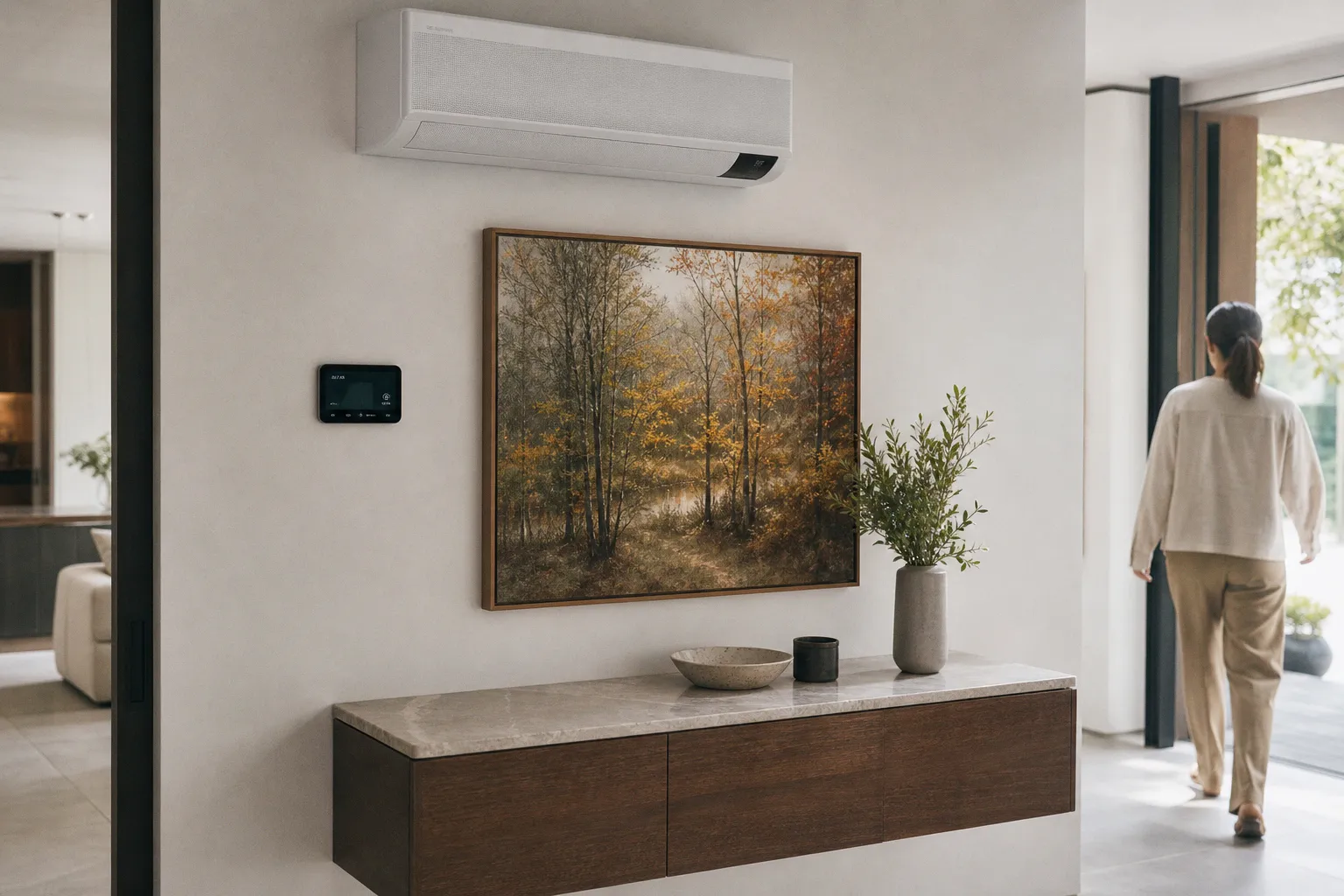
The company just announced the deployment of what it calls its next-generation residential climate ecosystem — a bundle that pulls together its WindFree cooling, PM1.0 air purification, SmartThings connectivity, and AI-enabled VRF (variable refrigerant flow) technology, all aimed at upscale housing developments. The first real-world showcase is Central Park Flower Valley's The Orchard in Gurugram, where the system is already installed across 284 luxury residences with a total installed capacity of 4,864 HP.
How the "Still Air" idea actually works in your home
The core pitch is WindFree technology, which disperses cooled air gently through 10,000 micro holes in the panel instead of the usual direct blast. Samsung's framing is a "Still Air" environment — the room reaches temperature, and rather than cycling on and off with that rushing draft, air seeps out so subtly that you're not constantly rearranging the throw pillows to escape the cold stream. For anyone who's fought with kids' rooms, a home office nook, or a bedroom where direct airflow means waking up with a sore throat, that's the everyday friction point Samsung is trying to solve.
On top of the cooling comfort, the system can be equipped with an optional PM1.0 purification panel — a two-stage filter setup. The pre-filter grabs larger dust and fibers, while the PM1.0 filter catches ultrafine particles as small as 0.3 microns. Samsung also says the filter sterilizes up to 99% of bacteria trapped in it, verified by Intertek. In a metro like Delhi NCR, where outdoor AQI regularly tips into hazardous territory, having something like this built into the ceiling cassette rather than a separate bulky purifier hogging floor space is a meaningful design shift.
What the AI and SmartThings piece actually does
Behind the scenes, the deployment runs on Samsung's DVM S2 VRF outdoor units with two AI-driven features baked in: Active AI Pressure Control and Active AI Refrigerant Analysis. In plain terms, the system is supposed to continuously tune refrigerant pressure and flow on its own, adapting to load changes so the whole building isn't hammering compressors in sync. That's the kind of thing a building manager notices more than a resident, but the practical result at home is steadier temperatures across units and a quieter outdoor unit doing its job.
Then there's the SmartThings side. Through the app, you can monitor and control your AC remotely, set cooling automations, and keep an eye on energy usage. For someone already running a smart home on Samsung's ecosystem, this slots in without a learning curve. For everyone else, it's one more app on the phone — but the integration does at least mean you don't need a separate smart controller bolted onto a wall unit.
Where this leaves you
Right now, the headline deployment is squarely Indian, aimed at the premium residential market and pitched at developers building large-scale luxury projects. That's not the typical consumer walking into an appliance store — it's a B2B play that shapes what shows up in newly built towers over the next few years. For most of us, the practical takeaway is watching whether WindFree panels, integrated PM1.0 filtration, and AI-VRF optimization trickle down into more standalone home units, and at what price. If you live in a metro with rough outdoor air and you care about sleep quality, this is the direction worth tracking on your shortlist.